
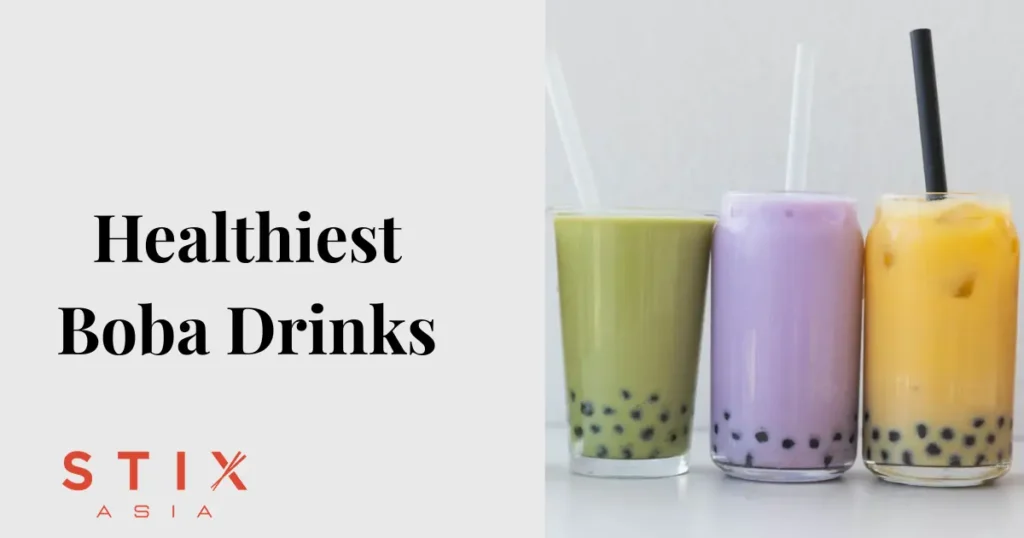
The good news is that you don’t have to give up your favorite boba to stay on track with your fitness goals. By making a few smart swaps and choosing the right bases, you can easily find healthy boba drinks that satisfy your cravings without the massive sugar crash afterward.
What’s actually inside your regular boba
At first glance, bubble tea doesn’t seem that bad. You have a tea base, some milk, and a few toppings. But the details are where things shift. Most standard drinks include:
- Sugar syrups, sometimes multiple
- Non-dairy creamers made from oils and glucose
- Tapioca pearls soaked in sugar
A single full-sugar milk tea can go well beyond recommended daily sugar limits. You do not need to quit boba to be healthy. You just need to adjust what goes into it. Instead of trying random combinations, it helps to think in layers: what is the base, what is adding calories, and what can be swapped?
A simpler way to think about healthy bubble tea options
Instead of guessing combinations or copying what others order, it helps to break your drink down into parts. That way, you’re not overwhelmed by the menu, and you can actually control what goes into your cup.
What’s the base
- Start with tea whenever possible, such as green, black, or oolong
- These are naturally low in calories and don’t need much added to taste good
- Milk-based drinks feel richer but increase overall calories quickly
- A lighter base gives you more flexibility with everything else
What’s adding calories
- Sugar syrups are usually the biggest contributor
- Non-dairy creamers often contain oils and added sugars
- Tapioca pearls can add a significant calorie load on their own
- Even flavored powders can increase sugar without you realizing it
What can be swapped
- Reduce sugar levels instead of removing it completely
- Choose fresh milk or plant-based options instead of powdered creamers
- Replace pearls with aloe, chia seeds, or grass jelly
- Use real fruit instead of flavored syrups when possible
The goal isn’t to find a “perfect” health drink. It’s just about finding an order you actually enjoy that doesn’t leave you feeling sluggish afterward. If you’re around STIX ASIA, it is a solid place to test this out. Since they lean into more authentic, traditional ingredients anyway, you get a much cleaner tea flavor that doesn’t need to be buried under layers of syrup to taste good.
10 healthiest boba drinks
The following are some of the realistic, healthy bubble tea choices you can actually order.
1. Jasmine Green Tea (0% Sugar)
This is the ultimate baseline for anyone looking for the lowest-calorie boba drink.
- Feature: Purely brewed jasmine green tea with no added syrup.
- Advantage: It contains almost zero calories.
- Benefit: It feels light and refreshing without any of the heaviness of milk or sugar.
- So What: This is the safest bet if you want to enjoy the ritual of boba every day without the caloric impact.
2. Lemon Green Tea (25% Sugar)
If plain tea feels a bit too basic, adding citrus is the next step.
- Feature: Real citrus slices or fresh juice mixed with green tea.
- Advantage: The natural acidity of the lemon balances the flavor, meaning you need less sugar to make it taste “complete.”
- Benefit: You get a bright, zesty flavor profile that works perfectly even without toppings.
- So What: This is a perfect transition drink if you are trying to move away from high-sugar fruit syrups.
3. Oolong Milk Tea (Low Sugar + Almond Milk)
For the fans of the classic creamy look, this is a much smarter low calorie milk tea option.
- Feature: Earthy oolong tea paired with unsweetened almond milk.
- Advantage: Almond milk significantly reduces the calorie count compared to whole milk or heavy creamers.
- Benefit: Oolong has a complex, toasted flavor that makes the drink feel indulgent.
- So What: You still get that signature milk tea experience without the digestive heaviness or extra fat.
4. Matcha Latte (Unsweetened or Lightly Sweetened)
Matcha is a powerhouse ingredient that naturally fits into a healthy lifestyle.
- Feature: High-grade matcha powder whisked with plant-based milk.
- Advantage: Matcha is packed with antioxidants and provides a more sustained energy boost.
- Benefit: Because matcha is naturally slightly bitter, it requires much less sweetener to taste balanced.
- So What: This option is more filling than clear teas, making it a great afternoon snack replacement.
5. Black Tea with Fresh Milk (No Creamer)
This is a small detail that most people overlook, but it makes a massive difference.
- Feature: Traditional black tea mixed with real, fresh dairy or plant milk instead of powdered creamer.
- Advantage: Creamers are usually the real culprit behind high calorie counts because they are often processed with hydrogenated oils.
- Benefit: You get a much cleaner taste with fewer artificial additives.
- So What: Switching to real milk is one of the easiest ways to improve the quality of your drink instantly.
6. Grapefruit Green Tea (Real Fruit)
Not all fruit teas are the same. Many shops use flavored syrups that are essentially liquid sugar.
- Feature: Using fresh grapefruit segments rather than a pre-made concentrate.
- Advantage: Fresh fruit provides natural sweetness and a bit of fiber.
- Benefit: It offers a refreshing, sophisticated flavor that isn’t cloying.
- So What: If your fruit tea tastes like candy, it is likely syrup-based. Sticking to real fruit ensures it is a healthy boba choice.
7. Aloe Vera Green Tea
If you need a “chew” factor but want to stay lean, this is your best friend.
- Feature: Chunks of fresh aloe vera in a light tea base.
- Advantage: Aloe is very low in calories compared to starch-heavy pearls.
- Benefit: It adds a unique texture and is known for being hydrating.
- So What: Swapping pearls for aloe vera is a major calorie-saving hack that most people don’t utilize enough.
8. Chia Seed Fruit Tea
This one is a bit different because it focuses on how your body processes the drink.
- Feature: A base of fruit-infused tea loaded with chia seeds.
- Advantage: Chia seeds add fiber and healthy omega-3 fatty acids.
- Benefit: The fiber helps slow down sugar absorption, which prevents a spike in your insulin levels.
- So What: It isn’t just about the lowest-calorie boba tea, it is about choosing ingredients that keep you full and energized.
9. Grass Jelly Tea
Grass jelly is an underrated, traditional topping that deserves more attention in the West.
- Feature: A herbal, slightly mint-flavored jelly made from plant extracts.
- Advantage: It is naturally very low in sugar and calories.
- Benefit: It provides a soft, jelly-like texture that pairs beautifully with almost any tea base.
- So What: You get the “topping experience” without the sugar load of honey-soaked tapioca.
10. Cold Brew Tea with Light Honey
This is closer to a custom order that allows for maximum control.
- Feature: Tea that has been steeped cold for hours, topped with a small drizzle of honey.
- Advantage: Cold brewing results in a much smoother, less bitter tea, meaning you don’t need to mask it with sugar.
- Benefit: Honey is a more natural sweetener than processed high-fructose corn syrup.
- So What: This is the ultimate “clean” boba order where you control every single gram of sugar added.
The part most people underestimate: toppings
The toppings are where drinks quickly increase in calories. Tapioca pearls alone are added sugar:
- 150 to 200 calories
- high sugar content
Better alternatives include aloe, chia, and grass jelly.
A quick way to make a lower-calorie boba
- Skip powdered creamers
- Choose 0 to 50% sugar
- Use a real tea base
- Limit toppings to one
- Choose medium size
Where People Usually Go Wrong
Many people make assumptions after hearing the name, for example, they assume that brown sugar boba is healthier because it sounds more “natural.”
It might shock you to know that it is actually one of the highest-sugar options available.
Similarly, fruit teas aren’t always low-calorie, especially if they are made with heavy syrups.
Even plant milks can be higher in calories if the shop uses a sweetened version.
Sometimes, to get to the healthiest boba drink, all you need is to find out its ingredients and if it’s high, swap to healthier alternatives.
What it comes down to
You do not need to cut out boba to make better choices. You just need to shift how you order. When you move from full-sugar, heavy-topping, processed drinks toward lighter bases and controlled sweetness, you change the entire experience.
Instead of an indulgence that makes you feel a bit sluggish, it becomes a refreshing drink that you can actually enjoy more often. If you are ever in the mood for the absolute best version of these drinks, a visit to STIX ASIA is a must. Here, you will experience a difference between a drink you feel guilty about and one that is healthy but truly hits the spot.
FAQ: What People Actually Want to Know
What is the lowest-calorie boba drink?
Plain brewed tea, such as jasmine green or black tea with 0% sugar and no toppings, is the lowest calorie option. It is essentially calorie-free.
Is 0% sugar actually sugar-free?
Not completely. While it removes all “added” syrups, the tea leaves and especially milk (if added) contain small amounts of natural sugars. However, it is the best way to minimize your sugar intake.
Are pearls always unhealthy?
They aren’t “toxic,” but they are nutritionally empty and very high in calories. It is best to keep them as an occasional treat rather than a daily addition.
Can I drink boba regularly and still stay healthy?
Yes, as long as you control the sugar level, toppings, and portion size. If you stick to the healthiest boba options listed above, it can easily fit into a balanced diet.