
Unlike heavier wheat noodles, soba offers a clean finish, subtle complexity, and a balance of flavor and nourishment that appeals to everyday diners, chefs, and health‑conscious eaters alike. From casual meals to celebratory traditions, soba holds a lasting place in Japanese food culture.
What Is Soba Noodle Made Of?
Soba noodles are made from milled buckwheat seeds, not wheat. Despite its name, buckwheat is not related to wheat at all. It’s a seed from a flowering plant, which gives soba its distinctive taste and nutritional profile.
Most soba falls into two main categories:
Juwari Soba (100% Buckwheat)
Pure buckwheat noodles with no wheat flour added. These noodles are naturally gluten‑free, more aromatic, and more delicate in texture. They break easily and require skilled preparation.
Ni‑Hachi Soba (80% Buckwheat, 20% Wheat)
The most common style. A small amount of wheat flour improves elasticity and bite while preserving buckwheat’s flavor.
In traditional soba kitchens, the quality of the buckwheat, how finely it’s milled, and even the water used can change the aroma and mouthfeel of the final noodle.
What Does Soba Taste Like?
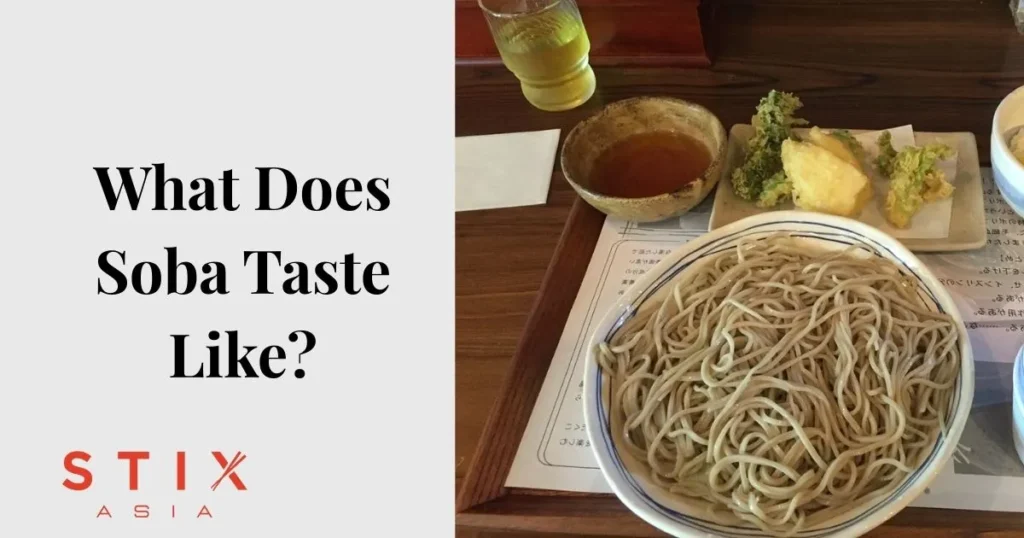
Soba has a gentle, nutty, slightly earthy flavor that’s clean rather than heavy. Compared to ramen or udon, soba feels lighter and more aromatic, with a subtle bitterness that balances beautifully with savory broths or dipping sauces.
The texture varies by type:
- Fresh soba is soft with a delicate chew
- Juwari soba tastes bold and rustic
- Blended soba offers a smoother, springier bite
This balance is why soba pairs well with simple ingredients like green onions, nori, tempura, or chilled dipping sauces without overwhelming the palate.
Fresh Soba vs Dried Soba
Fresh soba is typically made and served the same day. It has a fuller aroma and softer texture, but a short shelf life. High‑end soba restaurants often mill buckwheat in‑house and prepare noodles daily.
Dried soba is more widely available and convenient. While it lacks some of the fragrance of fresh soba, quality dried noodles still offer excellent flavor when cooked correctly.
For the best experience:
- Look for a high buckwheat percentage
- Avoid overly pale noodles (often wheat‑heavy)
- Cook gently and rinse well after boiling
How Soba Is Traditionally Served
Soba adapts easily to seasons, which is one reason it remains so popular across Japan.
Cold Soba (Zaru Soba)
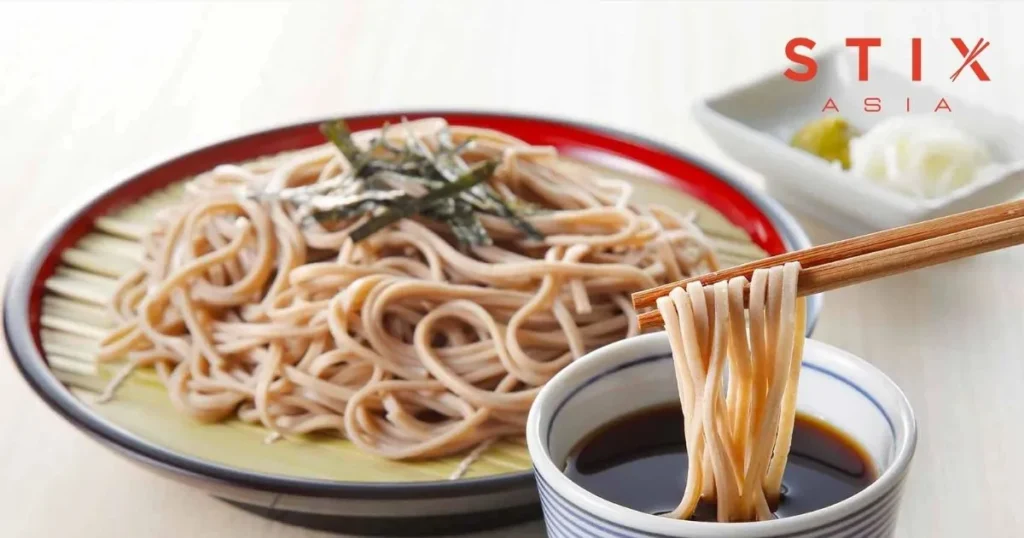
Chilled noodles served on a bamboo tray with a dipping sauce called mentsuyu, made from soy sauce, mirin, and dashi. Diners dip each bite lightly rather than soaking the noodles.
Hot Soba (Kake Soba)
Served in a warm, aromatic broth with toppings like green onions, fish cake, or tempura. The warmth softens soba’s earthiness into something comforting and gentle.
Popular Variations
- Tempura Soba – topped with shrimp or vegetable tempura
- Kitsune Soba – with sweet fried tofu
- Unagi Soba – paired with grilled eel
- Toshikoshi Soba – eaten on New Year’s Eve
Cultural Importance of Soba in Japan
Soba isn’t just food; it’s tradition. Eating toshikoshi soba on December 31 symbolizes longevity and letting go of hardship. The long noodles represent a long life, while their easy bite reflects resilience.
Historically, soba sustained rural communities during poor rice harvests. During the Edo period, soba stalls became everyday gathering places for workers and travelers.
Today, soba exists everywhere, from quick lunch counters to Michelin‑recognized kitchens, without losing its cultural identity.
According Research Buckwheat cultivation was first recorded in an imperial edict of 722 CE as an emergency crop during poor rice harvests.
Is Soba Healthy?
Soba is widely valued for its nutritional balance.
Key benefits include:
- Plant‑based protein
- Dietary fiber for digestion
- B vitamins for energy metabolism
- Minerals such as magnesium and iron
- Rutin, a natural antioxidant that supports blood vessel health
Research summarized by the National Institutes of Health highlights rutin’s role in cardiovascular support and antioxidant activity (nih.gov).
Because buckwheat has a lower glycemic impact than refined wheat, soba is often preferred by those seeking steadier energy levels.
Is Soba Gluten‑Free?
Only 100% buckwheat soba is gluten‑free. Many commercially available noodles contain wheat flour, which means they’re unsuitable for people with celiac disease.
Always check:
- Ingredient labels
- Buckwheat percentage
- Kitchen cross‑contamination
The U.S. Food & Drug Administration confirms that buckwheat itself is gluten‑free, but mixed flours must be clearly labeled.
How Soba Compares to Other Japanese Noodles
| Noodle | Main Ingredient | Texture | Flavor |
| Soba | Buckwheat | Light, slightly coarse | Nutty, earthy |
| Ramen | Wheat | Springy | Rich, savory |
| Udon | Wheat | Thick, chewy | Mild |
| Somen | Wheat | Very thin | Delicate |
How to Enjoy Soba Like a Local
- Slurp gently to release the aroma
- Dip lightly, don’t soak
- Eat promptly after serving
- Appreciate simplicity
In Japan, slurping is not rude; it’s encouraged.
Soba in Modern Dining
Today, soba has moved beyond tradition. Chefs incorporate it into salads, fusion dishes, and contemporary menus while preserving its essence.
At StixAsia, soba reflects the same philosophy: clean flavors, quality ingredients, and respect for tradition, served in a way that fits modern dining in Honolulu and Las Vegas.
Final Thoughts
Soba is more than a noodle. It’s a reflection of Japanese craftsmanship, seasonality, and balance. With its nutty flavor, nutritional depth, and adaptability, soba continues to appeal to traditionalists and modern diners alike.
Whether enjoyed chilled on a warm day or steaming in a comforting bowl, soba remains one of Japan’s most enduring and respected foods.
FAQs
Is soba healthier than ramen?
Soba is generally considered healthier than ramen because it’s made from buckwheat, which contains more fiber, plant-based protein, and minerals than refined wheat noodles. It’s also lighter, less calorie-dense, and easier to digest, especially when served simply.
Is soba better, hot or cold?
Neither is better universally; it depends on season and preference. Cold soba highlights the noodle’s aroma and nutty flavor, while hot soba offers comfort and warmth, especially in cooler weather. Both are traditional and equally respected.
What’s the difference between soba and ramen?
Soba is made primarily from buckwheat and has a light, earthy flavor. Ramen is wheat-based, richer, and usually served in heavier broths. Soba focuses on balance and subtlety, while ramen emphasizes depth and intensity.
What is the proper way to eat soba?
For cold soba, dip the noodles lightly into the sauce rather than soaking them. For hot soba, enjoy the broth and noodles together. Slurping is culturally acceptable and helps release aroma.
Is soba easy on the stomach?
Yes. Soba is often easier on the stomach than heavier wheat noodles because of its lighter texture and fiber content. Many people find it suitable when they want a satisfying but gentle meal.