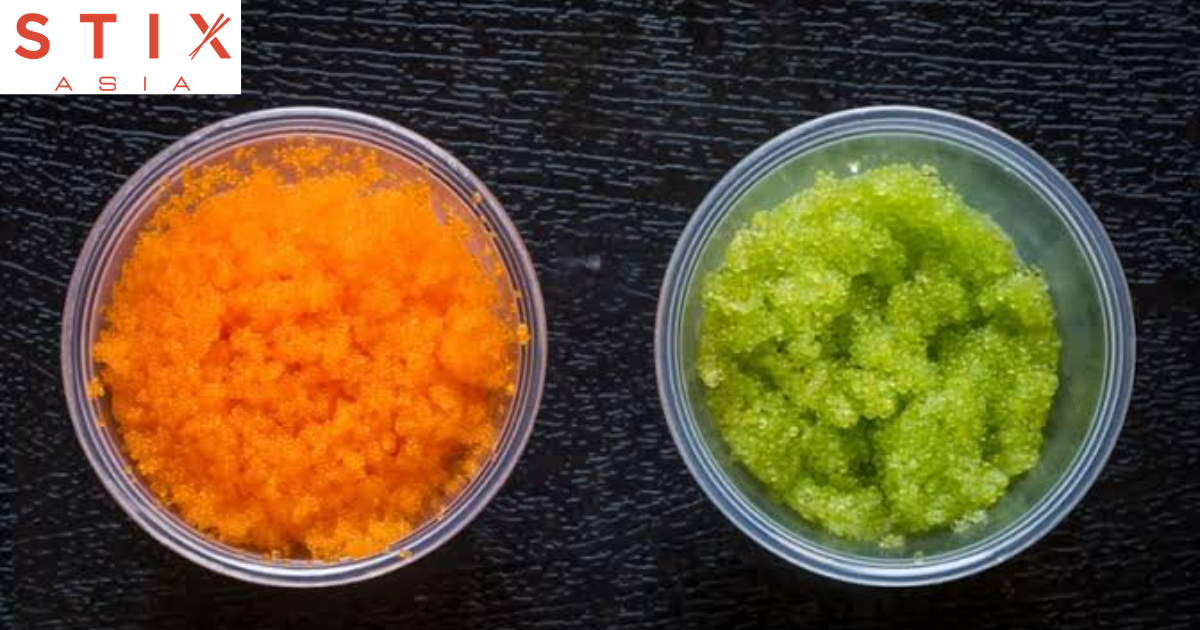

Although naturally pale yellow, masago is often dyed to create visual appeal in sushi presentations. It delivers subtle umami, light saltiness, and texture without overpowering other ingredients, making it a staple in modern sushi restaurants and Asian food halls.
What Exactly Is Masago?
Masago is capelin roe — the ripened eggs harvested from female capelin fish before spawning. Capelin belong to the smelt family and play a key role in the marine food chain. According to the National Oceanic and Atmospheric Administration, capelin are small forage fish that support larger species like cod, whales, and seabirds.
In culinary terms, masago is prized not for luxury status but for versatility. It’s affordable, flavorful, and visually striking. That combination makes it one of the most widely used fish roes in sushi bars across the United States.
Unlike larger roes, masago is tiny — about 0.5 to 1 millimeter in diameter — offering a gentle crunch rather than a dramatic pop.
What Does Masago Look Like?
In its natural state, masago is pale yellow. However, the version most diners see is bright orange. It can also appear red, green, or black depending on the seasoning or dye.
Why the color change?
Presentation matters in sushi. Bright roe contrasts beautifully against white rice, green avocado, and dark nori. In a food hall setting where dishes are shared and photographed, visual appeal drives ordering decisions.
What Does Masago Taste Like?
Masago has a mild, briny, slightly salty flavor with faint sweetness. It delivers:
- Light ocean salinity
- Subtle umami
- Gentle crunch
- No strong fishiness
Because it’s not overpowering, chefs use masago to enhance texture and depth rather than dominate the flavor profile.
When paired inside a California roll with masago, it balances creamy avocado and imitation crab with a delicate salty finish.
Why Is Masago So Popular in Sushi?
There are four main reasons masago sushi appears on so many menus:
1. Texture Enhancement
Sushi is about contrast — soft rice, creamy fillings, crisp nori. Masago adds micro-crunch.
2. Visual Appeal
Bright orange roe makes rolls look vibrant and premium.
3. Cost Efficiency
Masago is more affordable than tobiko or caviar, making it ideal for high-volume rolls.
4. Flavor Boost
A small spoonful transforms a simple roll into something layered and savory.
Masago vs. Tobiko: What’s the Difference?
Many diners confuse masago with tobiko. They look similar but differ in several ways.
| Feature | Masago | Tobiko |
| Source | Capelin | Flying fish |
| Size | Very small | Larger eggs |
| Texture | Fine crunch | Noticeable pop |
| Flavor | Mild, briny | Slightly sweeter, smokier |
| Cost | More affordable | More expensive |
Tobiko often appears in upscale sushi settings, while masago is common in california masago roll variations and spicy rolls.
Masago vs. Ikura and Caviar
Masago is frequently compared to:
- Ikura – Large salmon roe with bold flavor and popping texture
- Caviar – Luxury sturgeon roe, buttery and smooth
Ikura is juicy and intense. Caviar is rich and delicate. Masago is subtle and textural.
Each serves a different culinary purpose.
How Masago Is Used in Sushi
Masago in sushi can appear in multiple ways:
As a Topping
Sprinkled over rolls for color and crunch.
Mixed Into Fillings
Combined with spicy mayo for texture inside spicy tuna rolls.
Incorporated Into Sauce
Blended with soy sauce and rice vinegar for masago sauce.
In Specialty Rolls
Common in:
- California roll with masago
- California masago roll
- Spicy shrimp rolls
- Crunchy tempura rolls
In many Asian food halls, masago is also used in poke bowls and fusion dishes.
The California Roll With Masago
The classic California roll typically includes:
- Sushi rice
- Nori
- Imitation crab
- Avocado
- Cucumber
When masago is added, it:
- Elevates texture
- Adds subtle saltiness
- Enhances presentation
For families or first-time sushi eaters, this roll is approachable and visually inviting.
Is Masago Healthy?
Masago is nutrient-dense in small portions.
A tablespoon typically contains:
- Protein
- Omega-3 fatty acids
- Vitamin B12
- Selenium
According to the U.S. Food and Drug Administration, omega-3 fatty acids support heart health and cognitive function.
Because capelin are low on the food chain, they generally contain lower mercury levels compared to larger predatory fish.
However, masago is high in sodium. Moderation is key, especially for those monitoring salt intake.
Sustainability: Is Masago Responsible Seafood?
Capelin fisheries are monitored in the North Atlantic regions. Fisheries management practices vary by region, and sustainability can depend on sourcing.
Organizations like WWF have raised awareness about forage fish management, as these species support broader marine ecosystems.
When dining out, sourcing transparency matters. Responsible restaurants prioritize suppliers that follow sustainable fishing standards.
How to Eat Masago Beyond Sushi
Masago isn’t limited to rolls. Creative uses include:
- Masago-topped rice bowls
- Seafood pasta garnish
- Mixed into aioli
- Sprinkled over deviled eggs
- Incorporated into seafood salads
Because it’s potent in small amounts, a teaspoon can transform a dish.
Step-by-Step: How Masago Gets From Ocean to Plate
- Capelin are harvested during spawning season.
- Roe is carefully separated from the fish.
- Eggs are rinsed and lightly salted.
- Coloring may be added for presentation.
- Roe is refrigerated and distributed to restaurants.
Proper cold storage is critical to maintain freshness and food safety.
Pro Tips for Ordering Masago Sushi
- Pair it with creamy elements like avocado for balance.
- Try it inside spicy rolls for added crunch.
- Ask if it’s mixed into sauce or used as topping.
- If you prefer larger popping texture, ask about tobiko instead.
For food bloggers and social media diners, masago rolls photograph exceptionally well due to their color contrast.
When Should You Avoid Masago?
Avoid if:
- You have fish or roe allergies.
- You are on a strict low-sodium diet.
- You prefer bold seafood flavors like salmon roe.
Otherwise, it’s a versatile and approachable introduction to fish roe.
Why Masago Matters in Modern Asian Food Culture
Masago represents the evolution of sushi outside Japan. It’s affordable, visually exciting, and adaptable. In bustling food halls and contemporary sushi restaurants, it bridges traditional technique with modern dining expectations.
Its presence in California masago roll variations highlights how sushi continues to evolve for diverse audiences — families, tourists, and culinary explorers alike.
Final Thoughts: What Is Masago in Sushi?
Masago in sushi is simple; it’s the tiny, flavorful capelin roe that adds color, texture, and a mild briny finish to your favorite rolls. Those bright orange eggs aren’t just decorative; they enhance crunch, balance creamy ingredients, and elevate presentation without overpowering the dish.
If you enjoy rolls like a California roll with masago or specialty masago sushi creations, you’re tasting a classic ingredient that blends tradition with modern sushi culture. It’s subtle, affordable, and versatile, perfect for both first-time sushi eaters and experienced food lovers.
When prepared fresh and handled properly, masago adds depth and visual appeal to sushi, poke bowls, and Asian-inspired dishes. The best experience comes from restaurants that focus on quality sourcing, clean preparation, and authentic flavors.
At STIX ASIA, masago is thoughtfully incorporated into vibrant sushi rolls that celebrate bold Asian cuisine with contemporary style. Whether you’re exploring new flavors or ordering a familiar favorite, those tiny orange eggs bring texture, color, and balance to every bite.
FAQS
1. What is masago in sushi made from?
Masago comes from the roe of capelin fish.
2. Is masago raw?
Yes. It is typically cured and served raw.
3. What flavor does masago have?
It delivers a gentle ocean taste with light saltiness and a hint of sweetness, adding subtle crunch to every bite.
4. Is masago nutritious?
Yes, in small amounts. It’s rich in protein and healthy omega‑3 fats, though it contains a notable amount of sodium.
5. What’s the difference between masago and tobiko?
Masago is smaller, milder, and more affordable.