
Korean BBQ, also known as Korean barbecue or KBBQ, is a famous Korean dining style. Think of it as marinated meats, such as beef or chicken, cooked fresh on a hot grill and served with delicious sides. It’s full of bold flavors enjoyed in interactive social gatherings.
But many foodies still question:
- Is Korean BBQ always beef?
- Is Korean BBQ spicy?
- What are the health benefits of Korean BBQ?
This article will provide answers to all such queries. By the end, you’ll know exactly where Korean BBQ originated, its taste, health benefits, and why it is so special.
What is a Korean Barbecue?
Korean BBQ is a Korean dining tradition where raw marinated meat is served on your table and grilled on a tabletop grilling, right in front of you. You experience the live grilling, rather than fully cooked food, which makes the KBBQ dining experience unique, meaningful, and interactive.
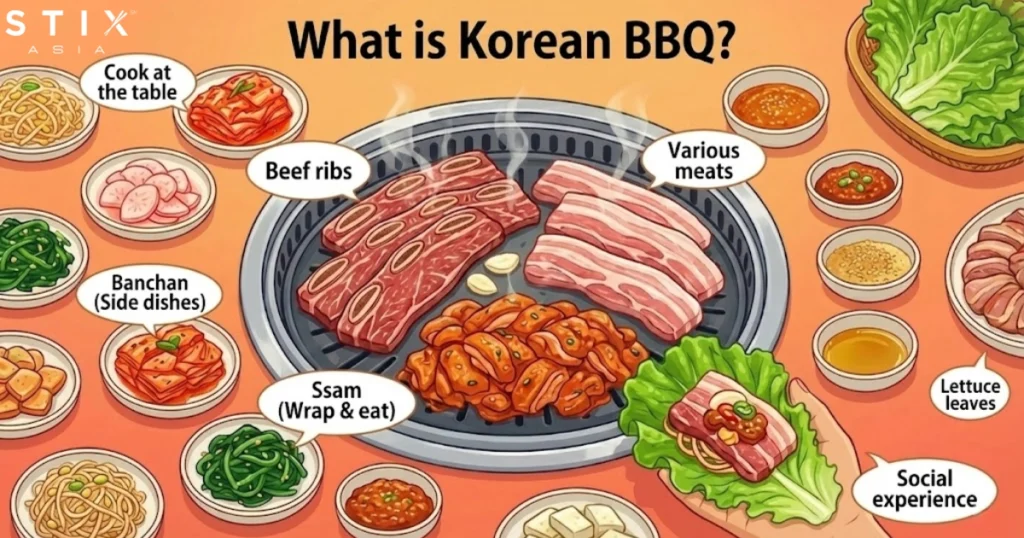
Korean BBQ can be enjoyed alone, but it’s usually a communal style of eating, where friends and family gather to enjoy live grilling, chit chat, and eat together. Compared to regular BBQ, Korean-style grilling focuses on thin cuts of meat, quick cooking, and making each bite unique and delicious with side dishes, sauces, and wraps. The fact is, Korean BBQ is an experience of food, culture, and connection, all together on one table.
Korean BBQ History:
Korean BBQ originated thousands of years ago, dating back to Gorguryeo era, an ancient Korean Kingdom. The native Koreans grill meat on open flames, and this practice is shown in old murals as well, reflecting that fire-based cooking was a part of their daily routine. This wasn’t fast food. It was a traditional Korean-style grilling popular for gatherings, seasons, and celebrations.
With time, Korean barbecue has evolved and blended with modern Korean food culture. What actually began as simple grilled meats, refined as premium grilled meat in the royal Korean cuisine period, where marinades, sauces, and meat cuts were introduced. Today’s Korean BBQ merges this culinary history with modern dining, keeping the tradition alive while making it loved globally!
What is Usually in Korean BBQ?
Korean BBQ is more than a dish; it’s a full-table experience. When you order, you actually sign up for a mix of: freshly grilled meat, delicious sides, and creamy sauces. All the things arrive together, so you can cook at your pace on the grill, build and eat, enjoying live grilling and delicious taste.
Korean BBQ is a combo of fresh ingredients and bold flavors. Nothing feels overly complicated; in fact, each element serves its purpose. From meat to marinades and vegetables, each ingredient together creates that signature KBBQ taste that people crave. The core ingredients of a Korean BBQ are:
-
- Beef Cuts: Popular options include bulgogi beef, short ribs (galbi), brisket, ribeye, and sirloin. Some Korean BBQ spots also feature premium Japanese beef, such as Wagyu or Kobe-style cuts, prized for their exceptional marbling and tenderness.
- Soy Sauce: It’s the base for most Korean BBQ marinades, adding umami flavor and depth.
- Garlic: Used in marinades and sauces for aromatic flavor.
- Sesame Oil: It’s used as a dipping oil, usually brushed on meat. It adds nuttiness and richness.
Sugar and Korean Pear: Adds tenderness in the meat naturally and balances the saltiness.
Korean Chilli Paste (Gochujang): Adds heat, sweetness, and fermented complexity in the spicy marinades and sauces.
-
- Vegetables: Commonly include onions, scallions, lettuce, perilla leaves, mushrooms, zucchini, and peppers, for grilling and wrapping.
Dipping Sauces: Includes sesame oil with salt and pepper, ssamjang, or soy-based sauces.
All these ingredients together create an authentic Korean BBQ experience. It’s flavorful without making you feel heavy because of balanced marinades and fresh veggies. Probably, this is the reason Korean BBQ remains a favorite across generations and cultures.
What is The Difference Between Korean BBQ and Regular BBQ?
If you compare Korean BBQ with American or Western-style BBQ, you’ll realize it’s a completely different type of experience. Although the core (grilling marinated meat) remains the same, but approach, flavor, and dining style create the real difference. Let’s break it down:
Korean BBQ vs American BBQ – Style and Dining
The most noticeable difference is how you eat. Korean BBQ focuses on interactive tabletop grilling, where you cook your meat live on your table while enjoying it with your friends or family.
On the other hand, American BBQ is usually pre-cooked by a pitmaster or grill master and served ready to eat.
In short, Korean BBQ vs American BBQ isn’t just about meat comparison. It’s a cultural and social versatility. Korean BBQ is live and focuses on social gathering, whereas the latter one is passive.
Grilling vs Smoking – Cooking Methods Compared
Another important distinction is the cooking method. Korean BBQ is cooked on high-heat grilling, usually for a short period, keeping the thin cuts of meat juicy and tender.
Western BBQ, especially American style, focuses on low and slow smoking, where meat is cooked on indirect heat or wood smoke for hours. It also creates a smoky flavor and tenderness, but requires patience and thorough attention.
So if we compare Korean grilling vs Western BBQ, Korean grilling is fast, interactive, fresh, and keeps the meat juicy and tender.
Marinades vs Dry Rubs – Flavor Approaches
Flavoring also tells a different story. Korean BBQ emphasizes marinated meats, usually with a mix of soy sauce, garlic, sesame oil, sugar, pear, and gochujang. Marinade makes the meat juicy and tender, and keeps the balance between sweet, savory, and spicy notes.
Western BBQ prefers dry rubs that are a mix of spices, salt, and sugar, and are applied before smoking. The flavor develops gradually and forms a thick crust (bark).
In short, the difference between KBBQ vs BBQ isn’t just about taste, it’s about method, preparation, and flavor intensity.
Tabletop Grilling vs Smoked BBQ – Interactive vs Passive
Finally, what makes Korean BBQ unique is its dining and cooking experience. Tabletop grilling allows you to cook meat according to your choice. You control your doneness, seasoning, and bites, either pairing with fresh veggies, sauces, or wraps.
On the other hand, smoked BBQ is passive. You enjoy food cooked by someone else (the chef), and the chances to customize at the table are also fewer.
Though both are enjoyable, Korean BBQ gives you the opportunity to participate and personalize according to your taste.
Here is a quick table comparing Korean BBQ vs Regular/ Western BBQ:
| Feature | Korean BBQ (KBBQ) | Regular/ Western BBQ |
| Dining Style | Interactive
Tabletop grilling You cook your meat on your table |
Pre-cooked or slow-smoked
Served ready to eat |
| Cooking Method | High-heat
Quick grilling of thin meat slices |
Low-and-slow smoking
Grilling over indirect heat |
| Flavor | Marinated meats (soy sauce, garlic, sesame, pear, gochujang) | Dry rubs or spice blends; smoky flavors develop slowly |
| Meat Cuts | Thinly sliced beef, chicken, or seafood | Thick beef or chicken cuts of ribs or brisket |
| Sides | Banchan: kimchi, vegetables, rice, sauces | Coleslaw, baked beans, potato salad, bread |
| Experience | Social
Hands-on grilling Personalized per bite |
Passive
Served ready Flavor consistent from the chef |
| Spiciness | Mild to spicy, depending on the marinades and sauces you choose | Usually mild. If you want to make it spicy, you can add sauces |
This comparison clearly explains the difference between Korean BBQ and Regular BBQ style, cooking method, flavor, and dining experience.
Taste of Korean BBQ:
Korean BBQ has a balanced taste between sweet and savory flavors. Marinades, including soy sauce, garlic, and sesame oil, make meat delicious and tender. High-heat grilling develops subtle smoky grilled meat that enhances the natural taste further. Korean BBQ has a rich umami flavour, fermented chilli paste, and the combination of sauces with banchan makes it deeply satisfying. In short, every bite of Korean BBQ is a perfect blend of flavor, aroma, and texture, making it irresistible.
This rich, melt-in-the-mouth flavor is often enhanced by premium, highly marbled beef like Wagyu, which is prized for its buttery texture and exceptional juiciness.
Nutritional Content of Korean BBQ:
Korean BBQ is a nutrient-rich meal when paired with veggies. A typical 100-serving of grilled Korean BBQ has the following nutrients:
| Nutrient | Value |
| Calories | 200-250 kcal |
| Protein | 20-25 grams |
| Fat | 10-15 grams |
| Carbohydrates | 2-5 grams |
| Sodium | 300-500 grams (varies according to the ingredients of the marinade) |
Besides these, Korean BBQ provides essential nutrients such as iron and potassium.
Is KBBQ Healthy?
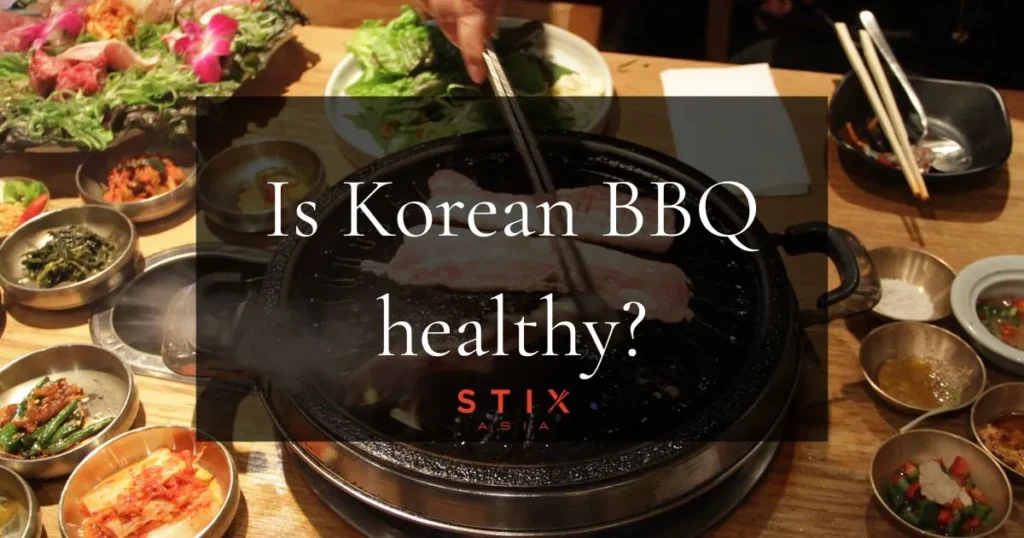
Yes! Korean BBQ is healthy when made from lean beef or chicken and paired with fresh veggies. Grilling reduces the fat and calorie content, making it a delicious, high-protein meal.
- Korean BBQ is high in protein, supporting muscle repair, satiety, and metabolism.
- Vegetables and leafy wraps provide iron, potassium, and antioxidants.
- The grilling method reduces fat and helps retain flavor.
Some marinades and sauces may contain high sodium and sugars. Also, if you choose fatty cuts of beef, it increases calories. Excess intake can cause high blood pressure or affect weight. But moderation and portion control are the key.
Here are some tips to enjoy Korean BBQ healthily:
- Choose chicken or lean beef cuts like sirloin
- Use vegetables and lettuce wraps
- Control portion size
- Try eating occasionally for a balanced diet.
Is KBBQ Spicy?
Not always. The spice actually depends on the heat level cut and the marinade. Plain meats or unseasoned beef are mild, while gochujang spice or chilli-based sauces add heat.
The concept that all Korean BBQs are spicy is a myth. In most of the restaurants, you can control the spice level by choosing marinades, sauces, or dipping condiments.
Common Korean BBQ Servings
Korean BBQ is a shared Korean meal full of flavors and textures. Korea BBQ is usually served with:
- Banchan (Korean side dishes) are small refillable plates including kimchi, pickled radish, seasoned vegetables, potato salad, and other items. It’s served with the main BBQ and enjoyed during the meal.
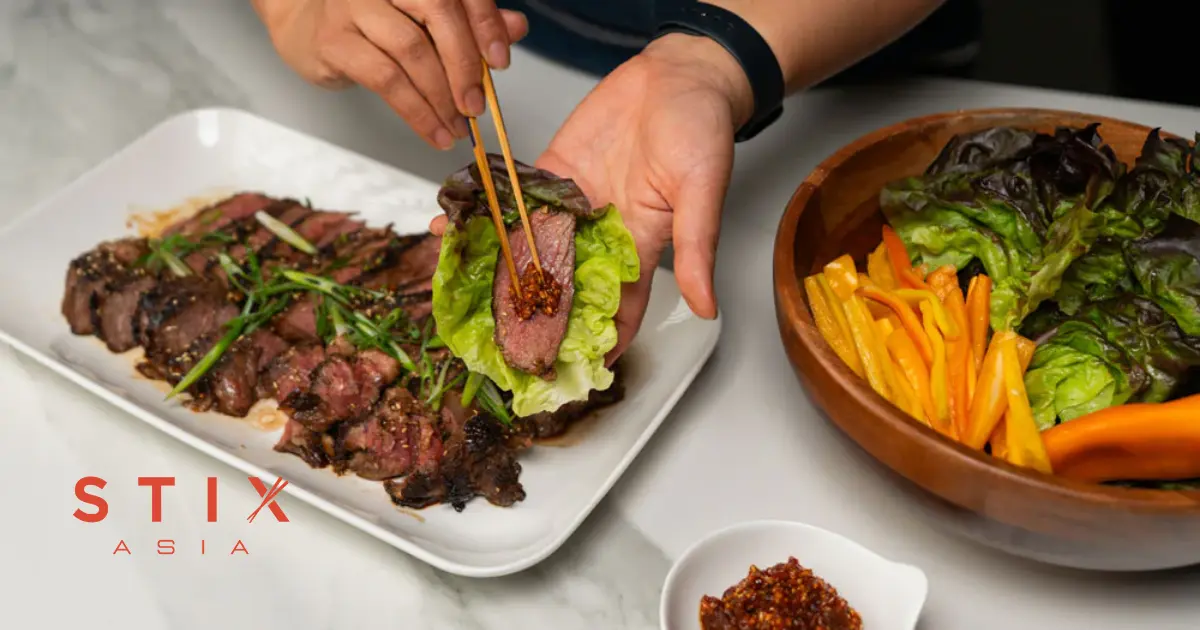
- Lettuce wraps (ssam) are crisp lettuce or perilla leaves. They become edible vessels into which you can add grilled meat, rice, ssamjang (savory dip), and banchan for a hearty bite.
Korean BBQ is a shared meal, where everyone picks from the common plates. Enjoy their own ssam wrap and experience the interactive communal gathering.
Best Korean BBQ Restaurant in Waikiki and Las Vegas:
For authentic Korean BBQ, Stix Asia, the premier Asian food hall, is a must-visit restaurant in Waikiki and Las Vegas. Here you can enjoy fresh meats, delicious marinades, interactive tabletop grilling, and traditional banchan with a lively Asian grilling experience.
People Also Ask
Is Korean BBQ Always Beef?
No. While beef is a popular option for Korean BBQ, you can enjoy Korean BBQ chicken or even seafood Korean BBQ, such as shrimp or squid. You can personalize your meal at the restaurant according to your taste.
What is Korean BBQ Sauce?
Sauces add flavour to every bite. Popular Korean BBQ sauces include: ssamjang (savory dipping paste), gochujang sauce (spicy chili paste), and soy garlic sauce. These Korean dipping sauces complement grilled meat and leafy wraps, allowing you to customize each bite according to your preferred spice and flavor.
Best Korean BBQ Near Me in Waikiki?
Searching for Korean BBQ Waikiki, Stix Asia offers a top-tier Asian grill experience. Here you can enjoy fresh meats, Korean grill favorites, and an interactive communal step. It’s a perfect spot for foodies who want to enjoy authentic flavors in a social setting.