
For diners exploring authentic sushi experiences whether at a sushi counter, an Asian food hall, or through nigiri sushi delivery, understanding nigiri helps you order with confidence and appreciate what makes it special.
The Meaning Behind Nigiri Sushi
The word nigiri comes from the Japanese verb nigiru, meaning “to grasp” or “to press.” That definition matters. Nigiri isn’t rolled, wrapped, or cut into sections. Each piece is shaped gently by hand, forming an oval pillow of rice that supports the topping without overpowering it.
Unlike many modern sushi styles that focus on abundance and variety within a single roll, nigiri follows a minimalist philosophy rooted in traditional Japanese food culture. The goal is clarity of flavor, nothing unnecessary, nothing distracting.
What Makes Nigiri Different From Other Sushi Styles
Many people use “sushi” as a blanket term, but not all sushi is the same. Understanding the difference between sushi vs sashimi vs nigiri makes ordering and tasting far more enjoyable.
Nigiri vs. Sashimi
- Nigiri includes vinegared rice topped with fish or seafood.
- Sashimi is simply sliced fish served without rice.
Sashimi focuses entirely on the fish itself, while nigiri balances rice, topping, temperature, and texture in a single bite.
Nigiri vs. Maki (Sushi Rolls)
- Maki is rolled sushi, usually wrapped in seaweed (nori) and sliced into pieces.
- Nigiri is open-faced, with rice on the bottom and topping on top.
Rolls often include multiple ingredients, sauces, and textures. Nigiri is intentionally restrained, allowing the quality of each component to stand on its own.
According to Wikipedia’s overview of sushi styles, nigiri remains one of the most traditional and widely respected forms of sushi in Japan, especially at sushi counters where chefs prepare each piece to order.
The Core Components of Nigiri Sushi
Despite its simplicity, nigiri relies on precision. Each element plays a specific role.
Sushi Rice (Shari)
Nigiri rice is short-grain Japanese rice seasoned with rice vinegar, sugar, and salt. It should be:
- Slightly warm (never cold)
- Lightly sticky but not dense
- Subtly seasoned, not sour or sweet
In Japan, chefs often spend years mastering rice preparation before working with fish. The stickiness of short-grain sushi rice is due to its high amylopectin content, which gives sushi rice its signature ability to stick together and hold shape when formed by hand.
The Topping (Neta)
The topping can be raw or cooked, depending on the ingredient. Common characteristics include:
- Thin, even slicing
- Proper grain direction for tenderness
- Sushi-grade freshness
Wasabi
Traditionally, a small amount is placed between the rice and the topping by the chef. This helps bind the fish to the rice and adds gentle heat without overpowering the flavor.
Nori (Occasional)
Some nigiri styles use a thin strip of seaweed to secure toppings that don’t naturally adhere well to rice, such as eel or egg.
How Nigiri Sushi Is Made: Step by Step
Watching a skilled chef prepare nigiri reveals how much technique is involved in something so small.
Rice portioning
The chef takes a small amount of warm rice, roughly two fingers wide.
Hand shaping
The rice is pressed lightly into an oval shape firm enough to hold, loose enough to fall apart in the mouth.
Wasabi placement
A minimal dab is applied to the topping or rice, depending on tradition and fish type.
Topping placement
The fish or seafood is laid gently over the rice, aligned for balance and texture.
Final adjustment
A subtle press ensures the topping and rice form a cohesive piece without compression.
The result should feel almost weightless when eaten.
Popular Nigiri Sushi Types You’ll See on Menus
There are many nigiri sushi types, ranging from beginner-friendly to more adventurous options.
Maguro (Tuna)
Lean, clean, and mildly flavored. Often, the benchmark for judging a sushi restaurant’s quality is.
Sake (Salmon)
Rich, buttery, and slightly sweet. One of the most popular choices worldwide.
Hamachi (Yellowtail)
Smooth and delicate with a subtle fatty finish.
Ebi (Shrimp)
This classic shrimp nigiri sushi uses cooked, butterflied shrimp. Light, slightly sweet, and ideal for diners new to sushi.
Unagi (Eel)
Grilled freshwater eel brushed with a sweet-savory sauce. Soft, smoky, and fully cooked.
Tamago (Sweet Egg)
A layered Japanese omelet, slightly sweet. Often used as a test of a chef’s overall skill.
Gunkan-Style Nigiri
A variation where seaweed wraps around the rice to hold soft toppings like fish roe or chopped tuna.
Calories in Sushi Nigiri: What to Expect
Many diners ask about calories in sushi nigiri, especially when comparing it to rolls or other dishes.
On average:
- One piece of fish nigiri contains 40–70 calories
- Rice contributes most of the calories
- Fatty fish like salmon or tuna belly are higher in fat than lean fish
Compared to rolls with sauces, cream cheese, or fried components, nigiri is often a lighter, more balanced option.
Harvard Health Publishing explains seafood’s cardiovascular benefits, noting that fish-based meals support heart health when prepared simply and eaten in moderation.
Is Nigiri Sushi Healthy?
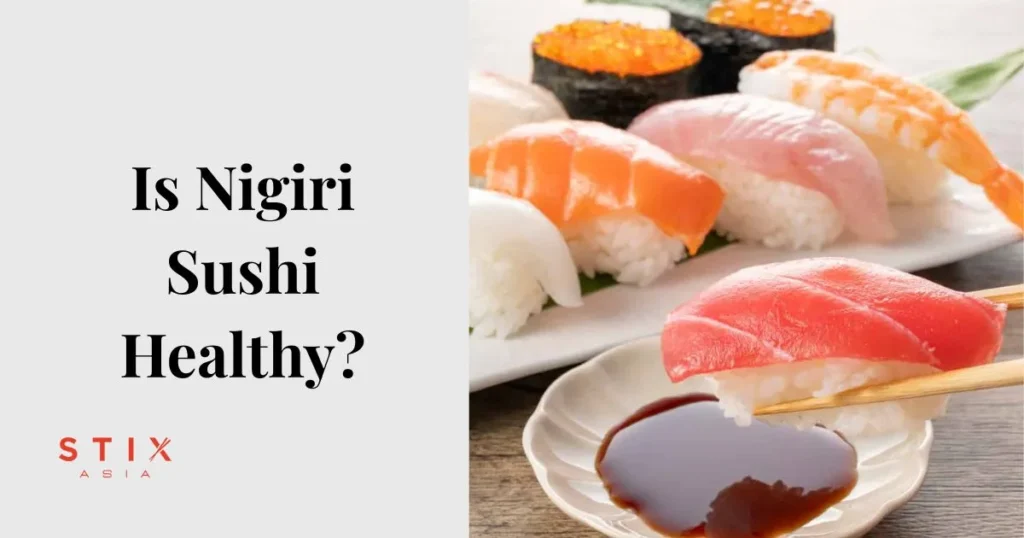
When made with high-quality ingredients, nigiri fits well into many balanced diets.
Potential benefits include:
- Lean protein from fish
- Omega-3 fatty acids
- Controlled portion sizes
- Minimal added sugars or oils
Things to be mindful of:
- Sodium from soy sauce
- White rice carb content
- Raw fish considerations for pregnant individuals or those with compromised immunity
Choosing reputable sushi kitchens and moderating portions helps maximize benefits while minimizing risks.
How to Eat Nigiri Sushi Properly
Nigiri etiquette is simple and practical, not rigid.
- Hands or chopsticks are both acceptable.
- Dip the fish side, not the rice, into soy sauce to avoid overpowering flavors.
- Eat in one bite if possible.
- Use pickled ginger between pieces, not on top.
These practices preserve the intended balance of each piece.
Nigiri Sushi at Restaurants vs. Food Halls
Nigiri experiences vary depending on where you’re dining.
Traditional Sushi Bars
- Chef-led experience
- Custom seasoning and wasabi levels
- Freshly prepared per order
Asian Food Halls
Modern Asian food halls bring together multiple kitchens and cuisines in one space, making them ideal for groups and explorers. At destinations StixAsia in Honolulu, diners can enjoy expertly prepared sushi alongside other Asian favorites, perfect for families, tourists, and food-focused social outings.
Nigiri Sushi Delivery
With improved packaging and temperature control, nigiri sushi delivery has become more reliable. For best quality:
- Order from trusted kitchens
- Eat promptly
- Avoid heavy sauce-topped pieces for delivery
Pro Tips for Ordering Nigiri Like a Regular
- Start with lighter fish before moving to richer ones
- Ask what’s freshest that day
- Order à la carte to explore different types
- Trust the chef’s recommendations when available
Why Nigiri Sushi Remains a Classic
Nigiri sushi endures because it respects ingredients and rewards attention. There’s no hiding behind sauces or fillings. Every detail—from rice temperature to knife work—matters. Whether enjoyed at a sushi counter, shared at an Asian food hall, or ordered for delivery after a long day, nigiri offers a direct connection to the craft of Japanese cuisine.
For diners exploring Honolulu’s diverse food scene, places that celebrate quality, balance, and authenticity, StixAsia makes it easy to experience nigiri alongside a wider range of Asian flavors, all in one setting.
FAQs About Nigiri Sushi
Is nigiri sushi always served in pairs?
Often yes, but portions vary by restaurant.
Can nigiri be vegetarian?
Yes. Options may include tofu, avocado, or seasoned vegetables.
Does nigiri contain gluten?
The rice and fish are gluten-free, but soy sauce may contain wheat.
What’s the difference between nigiri and gunkan?
Gunkan uses a seaweed wrap to hold loose toppings.
Is nigiri good for kids?
Cooked options like shrimp or egg are popular with younger diners.
How fresh should nigiri fish be?
Extremely fresh and properly handled. Quality matters more than variety.
Can nigiri be customized?
Many kitchens allow adjustments to wasabi or sauce.
Is nigiri better eaten immediately?
Yes. Timing affects texture, temperature, and flavor balance.