
Japan transformed this preservation method into the sushi we recognize today. Over centuries, Japanese cooks developed vinegared rice, fresh seafood combinations, nigiri, maki, and other styles that made sushi a defining part of Japanese cuisine.
So, if you are asking “Is sushi Japanese or Chinese?”, the clearest answer is: modern sushi is a Japanese culinary tradition, while its earliest roots can be traced to older fish-preservation techniques from Southeast Asia.
Is Sushi Japanese?
Yes. Modern sushi is Japanese. Although the earliest preservation method associated with sushi developed outside Japan, Japanese cooks transformed that method over centuries into the vinegared-rice cuisine recognized around the world today.
The distinction is important. Sushi’s ancient roots and modern identity are not exactly the same thing. Early forms relied on fermentation to preserve fish, while modern sushi is primarily defined by seasoned vinegared rice paired with seafood, vegetables, egg, or other ingredients.
Japan’s culinary history includes several stages of sushi development. Narezushi preserved fish through fermentation; later Japanese styles allowed the rice to be eaten with the fish; and during the Edo period, vinegar-seasoned rice helped create faster forms of sushi. Eventually, nigiri-zushi became one of the best-known forms of modern sushi.
That is why sushi is correctly described as Japanese cuisine with older roots in Asian fish-preservation traditions.
Where Did Sushi Originate?
The earliest form of sushi is generally linked to narezushi, a method of preserving fish with salt and fermented rice. This tradition developed in parts of Southeast Asia and spread through regions of Asia before reaching Japan.
The original purpose was preservation rather than creating the fresh sushi served in restaurants today. Fish was packed with salt and rice and allowed to ferment, while the fermented rice was traditionally discarded after it had helped preserve the fish.
When the technique reached Japan, Japanese cooks gradually adapted it. Over time, fermentation became shorter, rice became an edible part of the dish, and vinegar was introduced to create the distinctive flavor associated with modern sushi.
Curious about its nutritional value? Learn whether Is Sushi Healthy and what makes certain sushi choices healthier than others.
How Sushi Evolved in Japan
Sushi did not become the dish we know today overnight. Its development in Japan happened gradually as cooks changed how fish and rice were prepared.
Narezushi: The Early Japanese Form
Early Japanese sushi continued to rely on fermentation as a way to preserve fish. The rice and fish were packed together and allowed to ferment for an extended period.
Hanazushi and Shorter Fermentation
Over time, Japanese cooks reduced the fermentation period. This made sushi faster to prepare and changed the texture and flavor of the rice and fish.
Vinegared Rice
The introduction and wider use of rice vinegar helped cooks recreate the sour flavor of fermentation without waiting months for the rice and fish to ferment naturally.
Edo-Period Sushi
During the Edo period, sushi became increasingly convenient and suited to urban life. Fresh fish from nearby waters could be paired with seasoned rice and served much more quickly.
This gradual evolution eventually led to the fresh, hand-pressed nigiri sushi associated with modern Japanese sushi.
How Japan Transformed Sushi
Japan did not invent the earliest fish-preservation method associated with sushi. Instead, Japanese cooks gradually adapted the technique and developed it into their own forms of sushi.
Early Japanese sushi, including narezushi, continued to use fermentation to preserve fish. Over time, fermentation periods became shorter, and the rice increasingly became part of the dish rather than simply serving as a preservation medium.
The use of vinegar further changed sushi preparation by providing the characteristic sour flavor of fermentation without requiring the same lengthy process.
During the Edo period (1603–1868), these developments helped sushi become faster and more convenient to prepare. Fresh seafood could be paired with seasoned rice and served quickly in Edo (present-day Tokyo).
These changes laid the foundation for modern Japanese sushi, including the development and popularization of nigiri sushi in the early 19th century.
Who Invented Modern Sushi?
There is no single person who invented sushi. Sushi developed gradually over centuries, beginning with ancient fish-preservation methods and evolving through Japanese culinary innovation.
However, Hanaya Yohei is widely credited with popularizing nigiri sushi in Edo (present-day Tokyo) during the early 19th century. His style used hand-pressed vinegared rice topped with fresh fish and could be prepared and served quickly without the long fermentation process used in earlier forms of sushi.
This was an important step in the evolution of modern sushi. Nigiri became a convenient food for people in the rapidly growing city of Edo and helped establish the style of sushi that remains popular today.
Important distinction: Hanaya Yohei is associated with the development of modern nigiri sushi, not the invention of sushi itself or conveyor-belt sushi.
Sushi Origin Timeline
| Time Period | What Happened |
| Ancient Southeast Asia | Fish preserved using fermented rice and salt |
| Ancient China | Preservation method documented and continued |
| 8th–9th Century Japan | Technique introduced to Japan |
| Muromachi Period | Rice vinegar became more common among sushi chefs as they refined their techniques, enhancing the flavor of sushi ingredients. |
| Edo Period | Modern sushi developed |
| Early 1800s | Hanaya Yohei created Nigiri Sushi |
| 1900s | Sushi spread internationally |
| Today | Sushi is enjoyed worldwide, making it a staple of Japanese food. |
Is Sushi Japanese or Chinese?
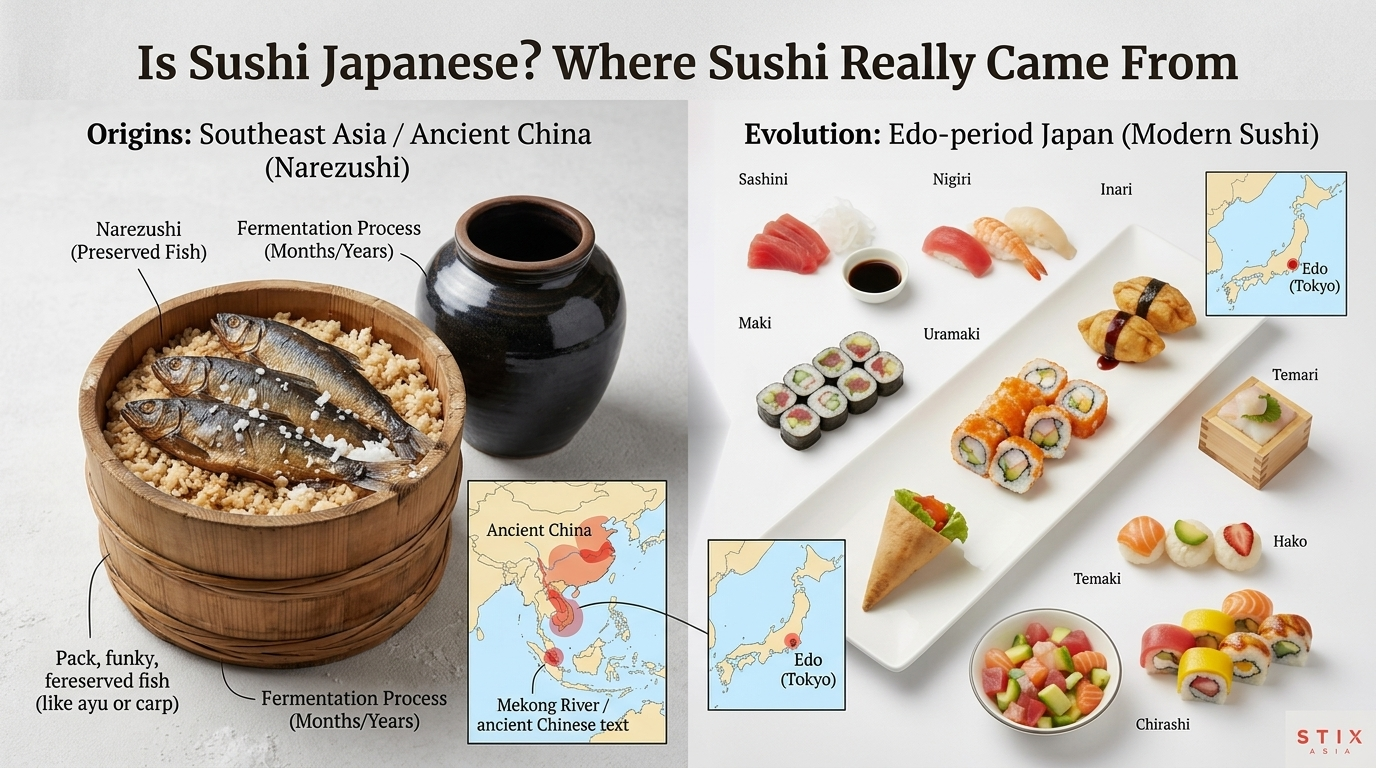
Modern sushi is Japanese, not Chinese. However, sushi has older roots that extend beyond Japan.
Early forms of fish preservation using salt and fermented rice developed in parts of Southeast Asia and spread through Asia. Similar preservation practices were also documented in China. These early methods were not the same as the fresh sushi served in Japanese restaurants today.
Japan played the decisive role in transforming these older preservation techniques into a distinct culinary tradition. Japanese cooks developed shorter fermentation methods, vinegared sushi rice, fresh fish preparations, and styles such as nigiri and maki.
That is why sushi is considered Japanese cuisine today, even though its earliest historical roots predate its development in Japan.
Chinese Influence
- Preserved fish
- Fermentation is a technique used in the history of sushi.
- Long storage techniques, such as those involving salted fish, were essential in the early days of sushi preparation
- Rice discarded during sushi preparation is often a result of careful selection to ensure only the best quality is used.
Japanese Innovation
- Vinegared rice is a fundamental component of sushi preparation, giving it its distinctive flavor.
- Fresh seafood
- Rice eaten together
- Artistic presentation
- Many regional styles
Modern sushi is therefore considered Japanese cuisine because nearly every feature associated with sushi today was created in Japan, including the balance of fish and rice.
What Does the Word “Sushi” Actually Mean?
Sushi is often mistakenly defined as “raw fish,” but raw fish is not what makes a dish sushi.
The defining feature of modern sushi is seasoned sushi rice, typically prepared with vinegar, sugar, and salt. Sushi can contain raw seafood, cooked seafood, vegetables, egg, tofu, or other ingredients.
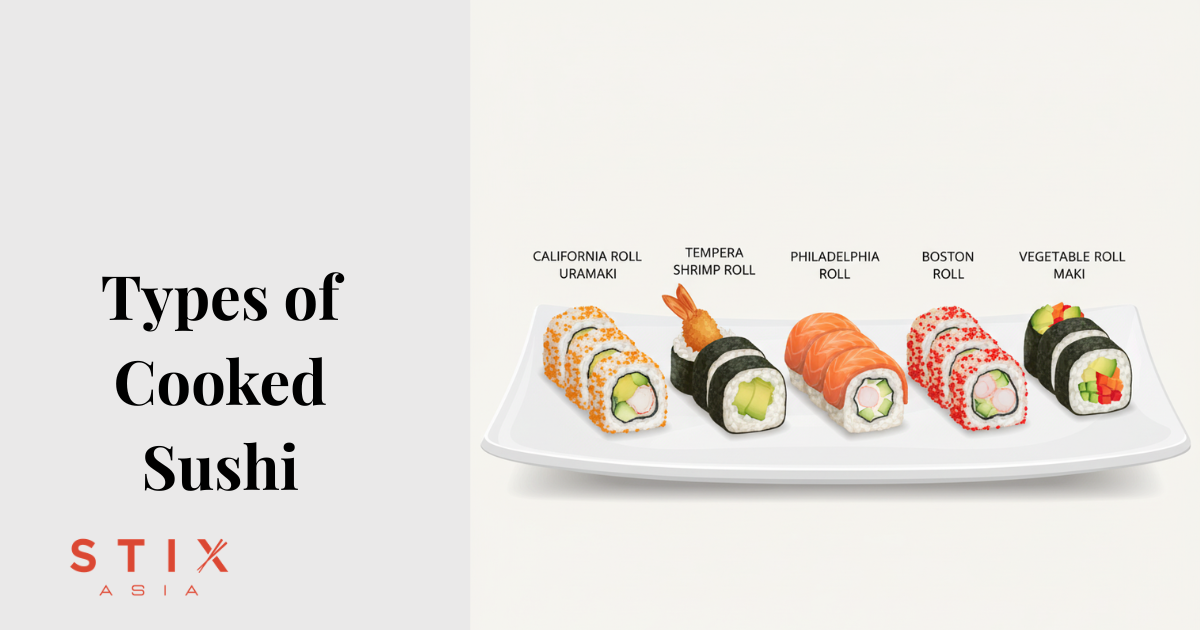
That is why dishes such as vegetarian rolls and sushi made with cooked shrimp or grilled eel can still be considered sushi.
Sushi = seasoned rice + accompanying ingredients.
Sashimi = sliced raw seafood served without sushi rice.
Sushi vs. Sashimi
Sushi and sashimi are different Japanese dishes.
| Sushi | Sashimi |
| Includes seasoned sushi rice | Served without rice |
| May contain raw or cooked ingredients | Typically consists of thinly sliced raw fish or seafood |
| Can include vegetables, egg, tofu, or seafood | Focuses primarily on the quality and preparation of the raw ingredient |
| Includes styles such as nigiri and maki | Usually served as sliced pieces |
The easiest way to remember the difference is simple: sushi involves seasoned rice; sashimi does not.
Enjoy Authentic Japanese Sushi at STIX ASIA
For anyone looking to experience authentic Japanese flavors in Honolulu, STIX ASIA brings together a variety of Japanese dining concepts in one vibrant food hall.
Guests can enjoy freshly prepared sushi alongside ramen, donburi, yakitori, and other regional specialties, making it easy for families, groups, and food lovers to explore different Japanese dishes in a single visit. Whether you’re trying sushi for the first time or searching for traditional favorites, the diverse selection offers something for every palate.
Why Is Sushi Closely Connected to Japan?
Sushi became closely associated with Japan because Japanese cooks transformed an older preservation technique into a distinctive culinary tradition.
Japan developed recognizable sushi styles, refined the preparation of sushi rice, emphasized seasonal seafood, and introduced techniques that prioritized freshness, balance, presentation, and craftsmanship.
The Edo period was especially important because sushi became a convenient urban food in Edo, where fresh seafood and prepared rice could be combined and served quickly. This helped establish sushi as part of Japanese food culture rather than simply a preservation technique.
Over time, Japanese sushi traditions spread throughout the country and eventually around the world, strengthening sushi’s association with Japan.
Conclusion
So, is sushi Japanese? Absolutely. While the earliest preservation techniques originated in Southeast Asia and spread through China, Japan transformed those ancient methods into the refined cuisine recognized worldwide today. From the invention of vinegared rice to the creation of Nigiri Sushi during the Edo period, Japanese chefs shaped sushi into a culinary tradition celebrated for its freshness, craftsmanship, and simplicity. Whether you’re curious about where sushi came from, who created sushi, or simply planning your next sushi meal, understanding its history makes every bite even more meaningful, especially considering the popularity of sushi today.
Frequently Asked Questions
Is sushi Japanese?
Yes. Modern sushi is a Japanese dish, although its earliest preservation method originated in Southeast Asia.
Where did sushi originate?
The earliest form began as a fermented fish preservation technique in Southeast Asia before evolving in Japan.
Is sushi Japanese or Chinese?
Modern sushi is Japanese. China played a role in preserving the ancient fermentation method, but today’s sushi was developed in Japan, where the origin of sushi is deeply rooted.
Who invented sushi?
No single person invented the original preservation method, which often involved salted fish as a key ingredient. However, Hanaya Yohei is credited with creating modern Nigiri Sushi.
What country is sushi from?
The sushi served in restaurants today comes from Japan.
Is all sushi raw?
No, but many people love to eat sushi. Many sushi varieties include cooked seafood, vegetables, tofu, or egg.
What is the difference between sushi and sashimi?
Sushi contains vinegared rice, while sashimi consists of thin slices of raw seafood served without rice, highlighting the quality sushi of Japanese cuisine.
Why is sushi so popular?
Its balance of fresh ingredients, variety of sushi, artistic presentation, and rich cultural heritage have made sushi one of the world’s most loved cuisines.
Is sushi originally from Japan?
No. The earliest sushi-related fish preservation methods developed outside Japan, particularly in parts of Southeast Asia. Japan later adapted these methods and developed them into the sushi tradition recognized today.
Did China invent sushi?
China did not invent modern sushi. Similar fish-preservation methods using salt and fermented rice existed in Asia before sushi developed into its modern Japanese form.
Who invented nigiri sushi?
Hanaya Yohei is widely credited with popularizing nigiri sushi in Edo during the early 19th century. However, he did not invent sushi itself, which evolved over many centuries.