
The Foundation: Ramen Noodles
At the heart of every great bowl of ramen are the noodles, which can vary significantly in thickness and texture depending on the form of ramen being served. Ramen noodles are crafted from wheat flour, water, salt, and kansui, a unique alkaline mineral water that gives them their signature chewiness, essential for various ramen styles. The texture of the noodles plays a critical role in how they interact with the broth, especially when using chicken broth or pork broth, which can be enhanced with bonito flakes.
Thicker noodles pair beautifully with rich, creamy ramen broths like tonkotsu or paitan, allowing the soup to cling to each strand, making it a delightful noodle soup experience. Conversely, thinner noodles work best in lighter soups such as shio or clear seafood broths, ensuring the subtle flavors of the Japanese broth are not overpowered.
Some chefs experiment with alternative flours, including rice or buckwheat, offering a unique twist on the traditional noodle, which can be especially interesting when paired with straight noodles and a rich bone broth.
Types of Ramen and Their Unique Broths
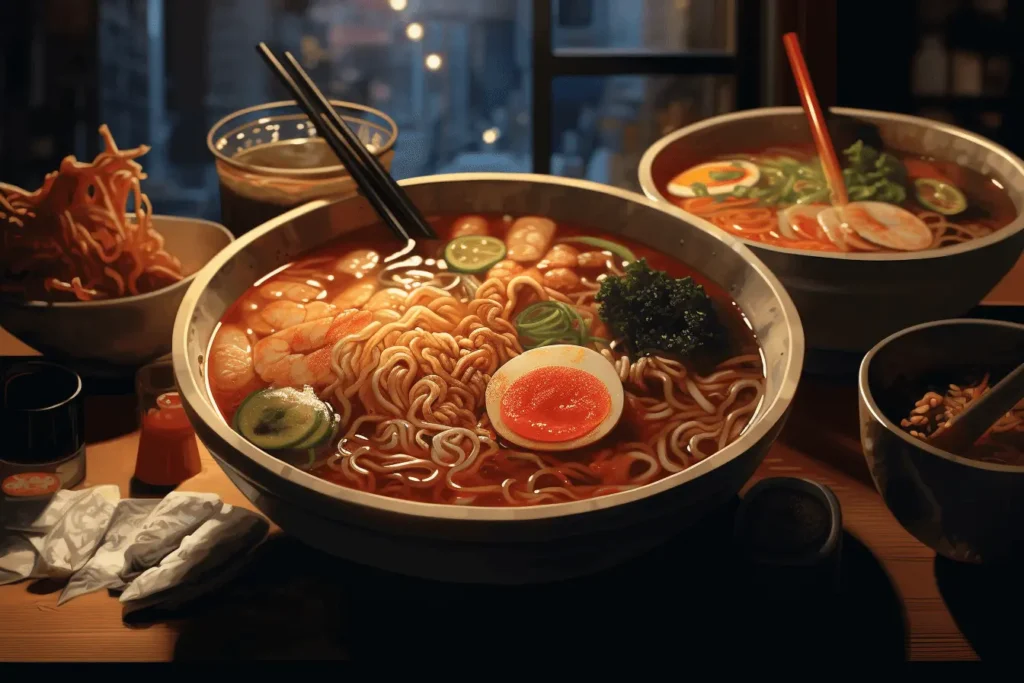
Ramen is more than just noodles; the broth defines the dish. Understanding the different types of ramen is essential for appreciating the complexities of Japanese soups, as outlined in a guide to ramen that includes styles like Sapporo ramen and Kyoto ramen. Traditionally, ramen falls into four primary categories: shio, shoyu, miso, and tonkotsu, each offering unique flavor profiles and ramen varieties.
Shio Ramen
Shio, meaning “salt,” produces a delicate, light broth that highlights the natural flavors of the noodles and toppings. Thisramen often features subtle ingredients such as green onions, bamboo shoots, and marinated eggs, making it a delightful form of ramen that highlights how noodles are made. The clear, clean taste of shio broth makes it ideal for those seeking a more refined flavor profile.
Shoyu Ramen
This characterized by its soy sauce tare, providing a savory depth to the broth. Shoyu ramen is distinguished by its soy sauce-based Japanese broth, which can be further enriched with toppings like bean sprouts and mayu for added depth. It has a richer flavor compared to shio, balancing saltiness with umami depth. The interplay between the slightly sweet soy sauce and savory chicken ramen broth creates a harmonious taste experience that captivates the palate. Comparing shio vs shoyu, the key difference lies in intensity: shoyu has a more pronounced flavor, while shio remains lighter and crisper, making them both popular choices for ramen at home, especially when paired with pork fat.
Miso Ramen
This is made with miso paste offers a unique twist on traditional flavors. Miso ramen is built on fermented soybean paste, giving the broth a thick, hearty texture and complex umami taste, making it one of the popular ramen varieties. Popular in northern Japan, especially in Hokkaido, miso ramen often includes butter, sweet corn, and ground pork, showcasing the region’s unique take on ramen styles. Its richness makes it a comforting option during colder months.
Tonkotsu Ramen:
Tonkotsu, or pork bone ramen, is known for its creamy, collagen-rich broth made by simmering pork bones for many hours, but chicken ramen offers a lighter alternative. Its deep, savory flavor pairs well with thicker, chewier noodles and robust toppings like chashu pork and soft-boiled eggs. Tonkotsu exemplifies how different ramen broths, such as pork broth, can dramatically change the eating experience.
Beyond these four types, there are countless regional variations and creative interpretations, including spicy miso, seafood-infused broths, and vegetarian ramen, all demonstrating the flexibility of ramen as a dish.
Exploring Ramen Broths
One of the most fascinating aspects of ramen is the diversity of ramen styles and broths. Japanese broths, including dashi, are meticulously crafted, often simmered for hours or even days, to extract deep flavors from ingredients. Common ramen broth types include chicken-based, pork-based, seafood-based, and vegetarian broths. Each offers unique flavor characteristics, with some styles like kyushu ramen emphasizing richer, pork-based broths.
- Clear broths: these light Japanese soups highlight delicate flavors and aromas, which can be enhanced by shoyu tare. Typically shio or shoyu, these light Japanese soups highlight delicate flavors and aromas.
- Rich broths: Tonkotsu or miso broths are creamy and full-bodied, ideal for pairing with hearty noodles.
- Fusion broths: The base of the ramen can greatly influence the overall flavor, showcasing the basic types of ramen available. Modern chefs experiment with combining traditional Japanese broth soup techniques with international flavors, offering unique ramen variations.
Exploring different ramen broths, including bone broth and paitan ramen, allows enthusiasts to understand why certain noodle textures, toppings, and condiments are paired together in this beloved noodle soup. For example, thick tonkotsu broths cling better to straight, chewy noodles, whereas lighter shio or shoyu broths are suited to thin, wavy noodles. Knowing the best type of ramen broth for your preference can transform an ordinary bowl into an exceptional culinary experience.
Toppings: The Art of Flavor Enhancement
Ramen toppings are not merely decorative; they are crucial for balancing and enhancing flavors, contributing to the overall style of ramen. Traditional toppings include chashu pork, bamboo shoots, soft-boiled eggs, nori (seaweed), corn, and green onions, which are essential components of ramen that enhance the overall experience of Japanese ramen.
Advanced ramen chefs experiment with toppings to create innovative ramen types, such as adding roasted garlic, mushrooms, or even seafood for regional variations. The combination of toppings and broth determines the overall flavor profile of the dish, making each bowl a unique experience in the world of ramen varieties.
Regional Ramen Variations in Japan
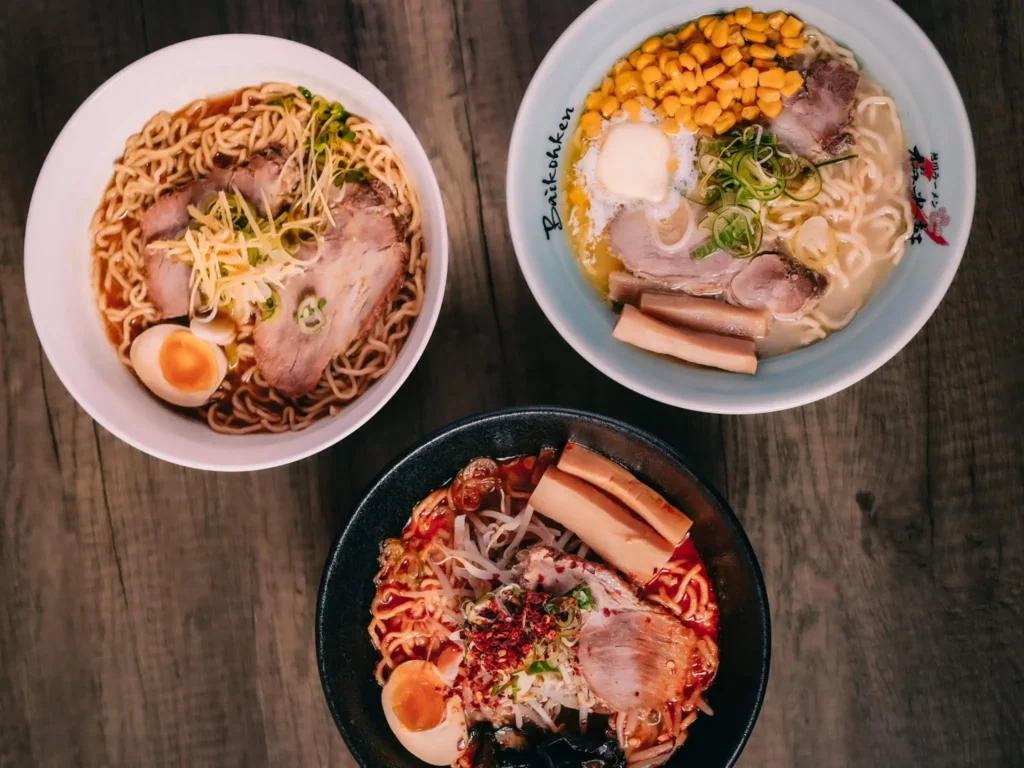
Different regions in Japan have developed their own signature ramen types, such as Sapporo ramen and Yokohama ramen, showcasing local ingredients and culinary traditions.
- Sapporo: Famous for miso-based ramen, often served with butter and corn for added richness.
- Hakata ramen is known for its rich, pork-based broth and thin noodles, making it a standout among ramen styles often showcased in ramen museums. Known for creamy tonkotsu ramen and thin noodles.
- Tokyo: A city renowned for its diverse ramen restaurants, including popular tokyo-style ramen that offers everything from traditional shio ramen to innovative fusion broths. Shoyu ramen dominates, featuring soy sauce-based Japanese broth with a delicate balance of flavors.
- Kyoto and Osaka: Often feature lighter broths with a focus on seafood or seasonal vegetables, which can complement the curly noodles found in some ramen styles.
Exploring different kinds of ramen is not just about tasting diverse flavors; it’s also a journey through Japanese culture, ingredients, and history, including the preparation of ramen at home.
Ramen’s Global Influence
Ramen’s popularity has spread far beyond Japan, influencing culinary scenes in cities like Yokohama and beyond, where inventive forms of ramen are celebrated. Internationally, chefs adapt traditional recipes to local tastes, creating unique ramen variations. From pop-up ramen shops in major cities to gourmet establishments offering fusion ramen, the dish has become a global phenomenon that showcases various styles of ramen.
Culinary festivals and ramen competitions celebrate this evolution, showcasing inventive ramen broths, noodle types, and toppings, including the use of mayu, highlighting the creativity in Japanese ramen.
Tips for Enjoying Ramen
- Match noodles to broth, ensuring that the style of ramen complements the flavors of the soup, particularly when using a rich tonkotsu or a delicate shio broth. Thicker noodles with richer broths, lighter noodles with clear soups.
- Experiment with toppings: Don’t shy away from adding new ingredients, such as sweet corn or pork fat, to create your own variation of ramen.
- Explore regional styles: Sampling different types of ramen can provide insight into Japan’s culinary diversity.
- Slurp with purpose: Every slurp of ramen doesn’t just bring flavor; it also connects you to the cultural heritage of the dish and the various forms of ramen it represents.
In Japan, slurping noodles enhances the experience and flavor perception.
Conclusion
Ramen is far more than just a meal—it is a journey through Japan’s culinary heritage, regional tastes, and modern innovation. With so many different ramen types, ramen broths, and toppings to explore, enthusiasts can enjoy endless combinations and flavors, making ramen at home an exciting culinary adventure that showcases various variations of ramen. From the light, delicate shio ramen to the indulgent, creamy tonkotsu, each bowl offers a unique insight into the art of Japanese soups and the use of different broths like paitan ramen.
Whether you’re a connoisseur or a first-timer, exploring ramen’s different types of broth and noodles is a rewarding adventure, especially with instant ramen options available that highlight the unique characteristics of shio broth. And for those looking to expand their Japanese cuisine repertoire, dishes like beef katsu or DIY bento boxes perfectly complement your ramen experience.
The next time you pick up your chopsticks, remember: a bowl of ramen is not just food—it’s an invitation to explore flavors, textures, and culture in every slurp, especially at your favorite ramen restaurants.