
Ask most home cooks what rice is used for sushi, and the honest answer is that they simply reach for whatever bag of white rice is already in the cupboard. It looks close enough. It is not. Sushi rice and white rice come from overlapping categories, but the differences between them, in grain shape, starch, and how each is seasoned, are the reason restaurant sushi holds together while a homemade attempt often falls apart on the cutting board.
This article walks through exactly what separates sushi rice from ordinary white rice, why that difference exists at a chemical level, what happens if you try to use one in place of the other, and how to choose correctly depending on what you are cooking.
What Kind of Rice Is Sushi Rice?
Sushi rice is a short-grain rice variety, most often Japanese japonica rice, chosen specifically for how it behaves once cooked. The individual grains are short, plump, and nearly round rather than long and slender, and that shape is directly tied to how much the rice sticks together after steaming.
The reason comes down to starch. Rice contains two starch types, amylose and amylopectin, and their ratio decides whether a grain turns out firm or clingy. The Tufts University Health & Nutrition Letter notes that shorter-grain rice carries a lower amylose share, typically in the 12 to 19 percent range, compared with longer-grain rice varieties (Tufts Health & Nutrition Letter). Lower amylose means more amylopectin by proportion, and amylopectin is the branched starch responsible for stickiness. That is the entire mechanical reason sushi rice can be pressed into a roll or shaped by hand while most other rice cannot.
Cooking the rice is only step one. Real sushi rice is not sushi rice until it has been tossed, while still warm, with a mix of rice vinegar, sugar, and salt. That seasoning step is what gives sushi its familiar light tang, and skipping it leaves you with plain steamed short-grain rice rather than the finished product a sushi chef would use.
What Counts as White Rice?
White rice is not a single variety. It is a processing category that includes any rice milled to remove its bran and germ layers, leaving behind the white starchy center. Long-grain rice, basmati, jasmine, medium-grain rice, and short-grain japonica rice are all technically white rice once milled this way.
That means sushi rice actually falls inside the white rice category rather than sitting outside it, which is part of why the two get confused. The distinction that matters is grain class, not whether the rice is white. According to the USDA Agricultural Research Service, the standard U.S. long-grain market class has intermediate amylose content, while the medium and short-grain classes run lower (USDA ARS). That single variable in grain classification explains why a pot of basmati stays loose and separate while a pot of short-grain rice clumps into something you can mold.
Sushi Rice vs White Rice: Side-by-Side Comparison
The table below breaks down the four factors that actually separate sushi rice from the white rice most households cook on a regular basis.
| Factor | Sushi Rice | Typical White Rice (long/medium-grain) |
| Grain shape | Short, plump, nearly round | Long and slender (basmati, jasmine) or medium |
| Starch ratio | Lower amylose, higher amylopectin | Higher amylose, lower amylopectin |
| Texture once cooked | Soft, chewy, sticky, holds a shape | Light, fluffy, grains stay separate |
| Seasoning | Always seasoned with rice vinegar, sugar, and salt | Typically plain or lightly salted |
| Best use | Sushi rolls, nigiri, onigiri | Side dishes, pilafs, stir-fries, rice bowls |
Grain shape is the easiest difference to spot with the eye. Sushi rice is short and rounded, while the white rice most households cook day to day, particularly long-grain and basmati, is elongated. That shape difference tracks directly with starch ratio: short-grain rice leans toward amylopectin and stickiness, long-grain rice leans toward amylose and structure.
Texture is where it actually matters at the table. Sushi rice cooks up soft, slightly chewy, and cohesive enough to hold a shape once pressed. Long-grain white rice cooks up light and separate, which works well in a pilaf or a side dish but does nothing to keep a roll from unraveling. This is the practical answer anyone asking what type of rice is used for sushi actually needs: it has to be short-grain, because grain length is what determines whether the rice will bind.
Seasoning closes the gap between the two. Everyday white rice, whatever the variety, is generally served plain or lightly salted. Sushi rice is always finished with vinegar, sugar, and salt while warm. Two pots of short-grain rice can look identical straight out of the cooker, and only the seasoned batch is actually sushi rice in the sense a sushi chef means it.
Is Sushi Rice Different From White Rice in Practice?
Yes, and the difference shows up the moment you try to substitute one for the other. Long-grain white rice, basmati, and jasmine all lack the amylopectin-heavy starch structure needed for the grains to hold together, so anything rolled with them tends to fall apart while slicing or while eating.
Unseasoned short-grain white rice comes closer, since the starch profile is correct, but it will taste flat compared with rice that has been properly seasoned. In other words, the difference between sushi rice and white rice is really two separate requirements stacked together: the grain has to be short for the texture, and it has to be seasoned for the flavor. Missing either one changes what you are eating from sushi to something closer to a plain rice ball with toppings.
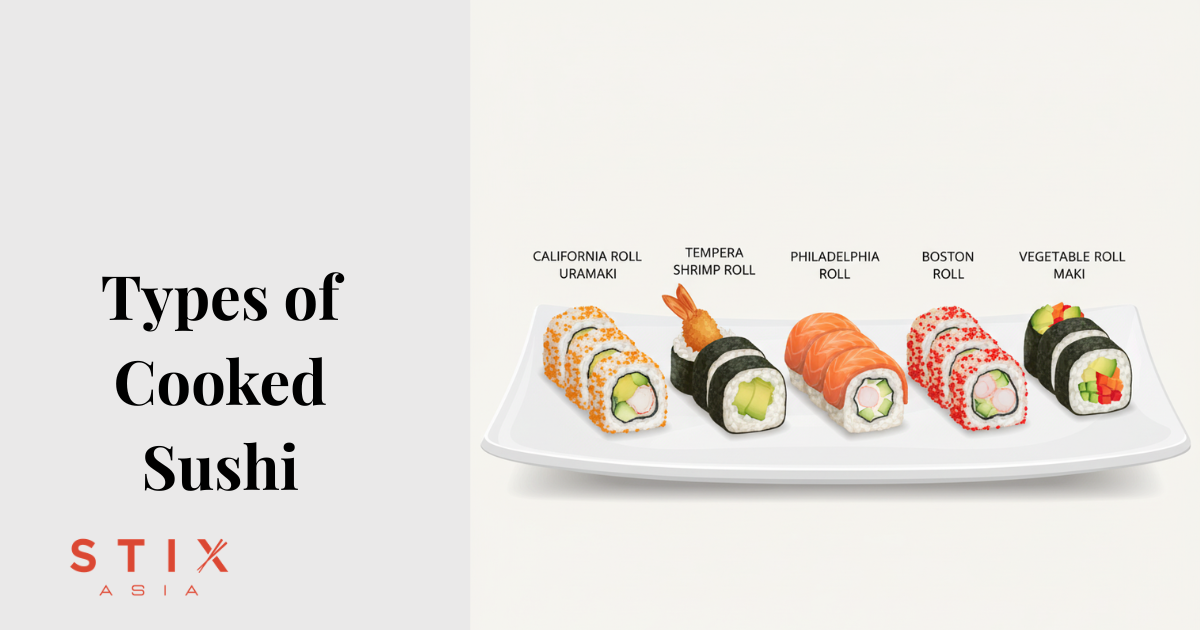
Anyone curious about how this rice foundation shows up across different sushi styles can see it in practice in STIX ASIA’s breakdown of cooked sushi types, which covers everything from fried rolls to cooked fish preparations, and in the dedicated guide to what nigiri sushi actually is, where the rice itself is arguably the more technical half of the dish.
Common Misconceptions About Sushi Rice and White Rice
| Myth | Fact |
| “Sushi rice and white rice are two completely different grains.” | Sushi rice is a type of white rice. The difference is grain class and seasoning, not an entirely separate category. |
| “Any short-grain rice will work for sushi.” | Unseasoned short-grain rice has the right texture but not the right flavor. Seasoning with vinegar, sugar, and salt is part of the definition. |
| “White rice is always fluffy and separate.” | Only long and medium-grain white rice behaves that way. Short-grain white rice, sushi rice included, clumps together due to its lower amylose content. |
| “Brown rice and white rice are the main distinction that matters for sushi.” | Bran removal is not the deciding factor. Grain length and starch ratio matter more than whether the bran layer is intact. |
| “You can swap in jasmine or basmati rice for sushi without much difference.” | Both are long-grain, high-amylose varieties that stay firm and separate, which prevents rolls from holding together. |
Which Rice Should You Use? A Quick Decision Guide
If you are making sushi rolls, nigiri, or onigiri:
use short-grain japonica rice, cooked and seasoned with rice vinegar, sugar, and salt. This is the only combination that delivers both the sticky texture and the traditional flavor.
If you are making a side dish, pilaf, or stir-fry:
use long-grain white rice, such as basmati or jasmine, where a light, separate texture is the goal rather than stickiness.
If you only have long-grain rice on hand and want to make sushi anyway:
expect the rolls to hold together poorly and fall apart when sliced. The starch structure of long-grain rice cannot substitute for short-grain rice’s stickiness, no matter how it is seasoned.
If you have short-grain white rice but no seasoning:
the texture will be correct, but the flavor will taste plain and starchy rather than like sushi rice. Season it before serving if the goal is an authentic result.
Why STIX ASIA Treats Rice as the Foundation, Not a Filler
Rice is rarely the ingredient diners think about first, but it is the one that determines whether everything else on the plate works. A chef who under-seasons or overcooks the rice changes how the fish tastes on top of it, even if the fish itself is handled perfectly. Rice that is too firm breaks apart a roll, and rice that is overseasoned drowns out whatever sits on top of it.
That balance is why STIX ASIA treats sushi rice preparation as its own discipline rather than a side task. Every dish starts with short-grain rice cooked and seasoned to a specific ratio, not a generic pot of white rice pulled straight from a rice cooker. The difference is not visible on the plate, but it is obvious in the first bite, and it is exactly why sushi rice vs white rice is not a debate about which is better so much as a question of which job each one is built for.
There is also a nutritional angle worth mentioning. Because sushi rice’s short-grain starch profile means less amylose, it tends to register a higher glycemic index than longer-grain white rice varieties, a detail explored further in STIX ASIA’s piece on whether sushi is actually healthy. Readers newer to ordering sushi altogether may also find the primer on how to eat sushi properly useful as a next read.
Frequently Asked Questions
What kind of rice is sushi rice?
Sushi rice is a short-grain Japanese rice variety, usually japonica, seasoned after cooking with rice vinegar, sugar, and salt. It is not a separate species of rice, just a specific grain class prepared a specific way.
What rice is used for sushi?
Short-grain japonica rice is the standard choice. Its lower amylose and higher amylopectin content give it the stickiness needed to hold a roll or nigiri together.
What rice is sushi rice, exactly, if it’s still technically white rice?
Sushi rice is a subtype of white rice defined by two things: short grain length and post-cooking seasoning. Every sushi rice is white rice, but not every white rice is sushi rice.
Is sushi rice different from white rice?
Yes, in grain shape, starch ratio, texture, and seasoning, even though sushi rice technically belongs to the broader white rice category.
Can I use regular white rice instead of sushi rice?
Long-grain white rice will not hold together well enough for rolls or nigiri. Short-grain white rice can work for texture, but it needs vinegar, sugar, and salt seasoning to taste like actual sushi rice.
Why does sushi rice taste slightly sweet and tangy?
That flavor comes from the rice vinegar, sugar, and salt mixture folded into the rice after cooking, not from the rice variety itself.
Does brown rice work the same way as white sushi rice?
Brown rice retains its bran layer, which affects texture and nutrition, but grain length still matters more for stickiness. Short-grain brown rice will cling better than long-grain brown rice, though neither matches seasoned short-grain white sushi rice exactly.
Is jasmine or basmati rice ever used for sushi?
Rarely, and not successfully in a traditional sense. Both are long-grain, high-amylose varieties built for separate, fluffy grains, which works against the stickiness sushi rolls need.
Conclusion: Choosing the Right Rice for the Job
For a side dish, a stir-fry, or a rice bowl, any white rice variety will do, long-grain for fluffy separate grains or medium-grain for something in between. For sushi, only short-grain japonica rice, properly seasoned with rice vinegar, sugar, and salt, delivers the texture and flavor the dish depends on. They belong to the same broad category but were never meant to do the same job.
That is why, at STIX ASIA, sushi rice is never treated as an interchangeable stand-in for whatever white rice happens to be on hand. The next time a roll holds its shape cleanly from the first bite to the last, that result traces back to the short-grain rice underneath it, seasoned the right way, doing the part of the work that is easiest to overlook and hardest to get right.