
The exact recipe can vary between sushi restaurants. Some versions use different toppings, sauces, or preparation methods, so it is always worth checking the ingredients before ordering.
If you are new to sushi, understanding the different types of rolls can make it easier to choose something that matches your taste. You can also explore this guide to different types of sushi and popular sushi styles.
Quick Summary
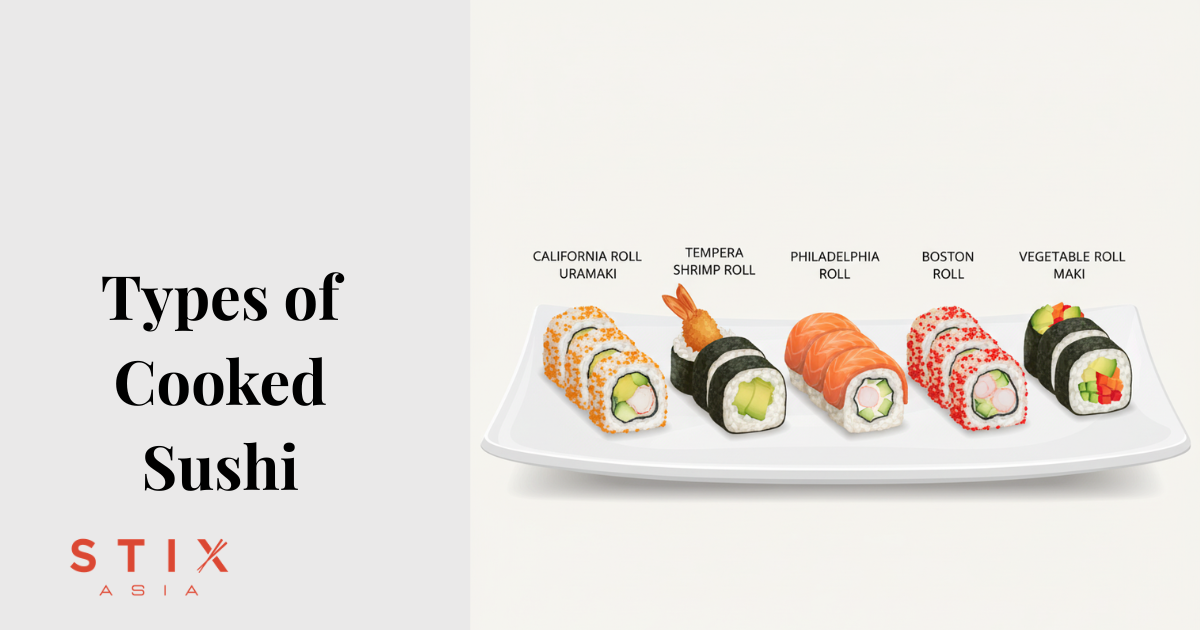
A Boston roll is usually an inside-out sushi roll containing cooked shrimp, avocado, cucumber, sushi rice, and nori. Tobiko may be added to the outside as a topping. It typically has a mild seafood flavor, creamy avocado, and crunchy cucumber.
The roll is generally different from a California roll because it uses cooked shrimp instead of the crab-style filling commonly associated with California rolls. Its calories depend on the portion size, rice quantity, toppings, sauces, and restaurant recipe.
What Is a Boston Roll?
A Boston roll is a type of Western-style sushi roll that commonly combines cooked shrimp with avocado and cucumber.
The roll is usually prepared in an inside-out style, also known as uramaki. In this format, the sushi rice is on the outside while the nori and filling are inside.
The main ingredients give the roll a combination of different textures. Shrimp provides a firm, slightly sweet seafood flavor, avocado adds creaminess, and cucumber provides a fresh crunch. Sushi rice brings the familiar seasoned rice flavor associated with sushi, while nori adds a mild seaweed taste.
Tobiko is another common addition. These small flying fish roe provide a slightly salty flavor and add texture to the outside of the roll.
Because recipes are not completely standardized, the ingredients in a Boston roll can differ from one restaurant to another. If you want to understand how different rolls are constructed, this guide to maki rolls and their different types can provide more context.
What’s in a Boston Roll?
The classic Boston roll ingredients are relatively simple. Most versions contain cooked shrimp, avocado, cucumber, sushi rice, and nori.
Here is what each ingredient contributes to the roll.
Cooked Shrimp
Cooked shrimp is usually the main seafood ingredient in a Boston roll.
Shrimp has a firm texture and naturally mild, slightly sweet flavor. Because it is cooked, it does not have the raw texture associated with sashimi or sushi rolls made with raw fish.
For home preparation, seafood should be handled carefully and cooked properly. The FDA recommends cooking most seafood to safe temperatures and notes that shrimp should become firm and pearly or opaque when cooked.
Avocado
Avocado gives the Boston roll its creamy texture. Its mild flavor works well with shrimp without overpowering the other ingredients.
The soft texture of avocado also contrasts with the crunch of cucumber, giving the roll more variety with every bite.
Cucumber
Cucumber adds freshness and crunch to the roll.
This is particularly useful because the avocado and sushi rice have relatively soft textures. The cucumber provides a crisp element that keeps the roll from feeling too rich.
Sushi Rice
Sushi rice forms much of the structure of the roll. It is usually seasoned with ingredients such as rice vinegar, sugar, and salt.
The slightly tangy and mildly sweet flavor of the rice helps balance the seafood and vegetables.
Nori
Nori is the edible seaweed sheet used to hold the ingredients together.
In an inside-out Boston roll, the nori is generally placed around the filling while the sushi rice is positioned on the outside.
Tobiko
Tobiko is flying fish roe and is often used as an exterior topping for sushi rolls.
It provides small pops of texture and a slightly salty flavor. However, tobiko is not mandatory in every Boston roll, so the finished dish may look and taste different depending on the restaurant.
What Does a Boston Sushi Roll Taste Like?
A Boston sushi roll generally has a mild and balanced flavor.
The cooked shrimp gives it a slightly sweet and savory seafood taste. Avocado adds creaminess, while cucumber contributes a clean, refreshing crunch.
Sushi rice adds a subtle sweet and acidic flavor, and nori provides a light seaweed note. If tobiko is included, the roe adds a slightly salty finish.
Overall, the Boston roll does not usually have the strong seafood flavor associated with some raw-fish sushi. That makes it a practical choice for people who are trying sushi for the first time or simply prefer cooked seafood.
Is a Boston Roll Cooked or Raw?
A traditional-style Boston roll sushi generally contains cooked shrimp rather than raw fish.
That is one of the main reasons the roll is different from sushi preparations that use raw seafood. However, restaurant recipes can vary, so you should confirm the ingredients if this distinction is important to you.
The FDA states that thoroughly cooking seafood is the safest way to reduce the risk of foodborne illness. It also advises higher-risk groups, including pregnant people, young children, older adults, and people with weakened immune systems, to avoid raw or undercooked fish and shellfish.
If the roll contains additional seafood or ingredients, ask the restaurant how those ingredients have been prepared.
How Is a Boston Roll Made?
The basic preparation of a Boston roll starts with sushi rice, nori, cooked shrimp, avocado, and cucumber.
The shrimp is cooked and prepared into pieces suitable for rolling. Avocado and cucumber are cut into strips so they can be placed evenly inside the roll.
For an inside-out roll, the sushi rice is spread over the nori and the ingredients are placed in the center. The roll is then carefully shaped using a bamboo sushi mat.
Once the roll is firm, it can be sliced into individual pieces. Tobiko or another topping may then be added to the outside.
The exact technique can vary depending on the restaurant or recipe.
When making a Boston roll at home, food safety is important. The FDA recommends preventing cross-contamination between raw seafood and ready-to-eat foods and keeping seafood properly refrigerated. (U.S. Food and Drug Administration)
Boston Roll Ingredients for Making It at Home
If you want to prepare a Boston roll yourself, the basic ingredients are easy to find.
You will generally need:
- Sushi rice
- Nori sheets
- Cooked shrimp
- Avocado
- Cucumber
- Tobiko, if desired
- Rice vinegar seasoning
- Optional sushi sauces
Start by preparing the sushi rice and allowing it to cool to a suitable temperature for rolling.
Prepare the shrimp and slice the avocado and cucumber into manageable strips. Place the nori on a sushi mat, add the rice according to your preferred rolling technique, and arrange the fillings in the center.
Roll everything firmly, then cut the finished roll into pieces using a sharp, slightly damp knife.
If you are preparing seafood at home, the FDA recommends keeping seafood refrigerated at 40°F or below when it is not being cooked immediately.
How Many Calories Are in a Boston Roll?
There is no single calorie count for every Boston roll.
The nutritional value depends on the amount of rice, shrimp, avocado, tobiko, sauces, and other ingredients used by the restaurant. Portion size also makes a significant difference.
A roll with more rice or a mayonnaise-based sauce will naturally have a different calorie profile from a simpler roll made with moderate amounts of rice, shrimp, cucumber, and avocado.
For this reason, restaurant-specific nutrition information is more useful than relying on one universal calorie number.
If you are comparing sushi rolls based on nutrition, pay attention not only to the seafood but also to sauces, fried toppings, and portion size.
Boston Roll vs. California Roll
The Boston roll and California roll share some similarities. Both commonly contain avocado and cucumber, and both are often prepared as inside-out rolls.
The main difference is the seafood ingredient.
A California roll is traditionally associated with crab or imitation crab, while a Boston roll generally uses cooked shrimp.
The flavor and texture are therefore somewhat different. Shrimp provides a firmer, slightly sweet seafood taste, while crab-style filling tends to have a softer texture and milder flavor.
The recipes can still vary between restaurants. Some versions may include additional sauces, toppings, or different ingredients.
If you are interested in another popular roll, you can read more about California roll calories and nutrition.
Is a Boston Roll Healthy?
Whether a Boston roll fits into a healthy diet depends on the ingredients, preparation method, serving size, and what else you eat with it.
Shrimp provides protein and other nutrients, while avocado contributes fats and vegetables such as cucumber add volume and freshness.
At the same time, sushi rice contributes carbohydrates, and additional sauces or toppings can change the nutritional profile considerably.
Shrimp is also included on the FDA’s list of lower-mercury “Best Choice” seafood options, although overall dietary choices should still include a variety of seafood. (U.S. Food and Drug Administration)
A simple Boston roll with cooked shrimp, cucumber, avocado, and moderate rice may have a different nutritional profile from a roll covered in creamy sauces or additional toppings.
Is a Boston Roll Gluten-Free?
A Boston roll made from shrimp, avocado, cucumber, sushi rice, and nori does not inherently require wheat-based ingredients.
However, you should not automatically assume that every Boston roll is gluten-free.
Soy sauce commonly served with sushi can contain wheat, and restaurants may use sauces or other ingredients that contain gluten. Cross-contact during preparation is another consideration.
If you have celiac disease or need to avoid gluten for medical reasons, ask the restaurant about every ingredient and its food-preparation procedures before ordering.
What Can You Eat With a Boston Roll?
A Boston roll can be served as part of a larger sushi meal.
Popular accompaniments include miso soup, edamame, seaweed salad, pickled ginger, and wasabi. Soy sauce is also commonly served alongside sushi.
The relatively mild flavor of a Boston roll means it can work well alongside stronger sushi flavors. You can also combine it with other cooked sushi if you prefer to avoid raw seafood.
For more pairing ideas, explore this STIX ASIA guide on what to eat with sushi.
Is Boston Roll Sushi Good for Beginners?
A Boston roll can be an approachable option for people who are new to sushi.
The main reason is that it generally uses cooked shrimp instead of raw fish. The avocado and cucumber also provide familiar flavors and textures.
If you are unsure about raw seafood but want to try sushi, a cooked shrimp roll can be an easier starting point.
Other cooked sushi options are available as well. You can explore different types of cooked and fried sushi to compare different preparations.
Frequently Asked Questions
What is a Boston roll?
A Boston roll is an American-style sushi roll commonly made with cooked shrimp, avocado, cucumber, sushi rice, and nori. Tobiko is often used as a topping, although recipes vary between restaurants.
What’s in a Boston roll sushi?
A typical Boston roll contains cooked shrimp, avocado, cucumber, sushi rice, and nori. Tobiko may also be added to the outside.
Is a Boston roll made with raw fish?
Usually, no. A traditional Boston roll generally uses cooked shrimp. However, ingredients can vary, so check with the restaurant if you need to avoid raw seafood.
Is Boston roll sushi cooked?
The shrimp used in a Boston roll is generally cooked. The other ingredients, such as avocado, cucumber, rice, and nori, do not require cooking as part of the finished roll.
How many calories are in a Boston roll?
The calorie content varies depending on the restaurant’s recipe, portion size, amount of rice, avocado, tobiko, and sauces. There is no single calorie count that applies to every Boston roll.
What is the difference between a Boston roll and a California roll?
The main difference is the seafood. A Boston roll generally uses cooked shrimp, while a California roll commonly uses crab or imitation crab. Both can contain avocado and cucumber.
Does a Boston roll contain tobiko?
Many versions use tobiko as a topping, but it is not included in every Boston roll. Check the restaurant’s ingredient list if you need to avoid fish roe.
Is a Boston roll healthy?
It can fit into a balanced diet, but its nutritional value depends on portion size and ingredients. Sauces, additional toppings, and large amounts of rice can significantly change the nutritional profile.
Can I make a Boston roll at home?
Yes. The basic ingredients are sushi rice, nori, cooked shrimp, avocado, and cucumber. Tobiko can be added as an optional topping. Proper seafood handling and refrigeration are important when preparing it at home. (U.S. Food and Drug Administration)
Final Thoughts
The Boston roll is a simple, approachable sushi option built around cooked shrimp, avocado, cucumber, sushi rice, and nori. Its mild seafood flavor, creamy avocado, and crunchy cucumber make it different from many sushi rolls that rely on raw fish.
If you are wondering what is a Boston roll, the simplest answer is a cooked-shrimp sushi roll with avocado and cucumber, usually prepared in an inside-out style.
The exact Boston roll ingredients can vary, so checking the restaurant’s recipe is always worthwhile, particularly if you have allergies or dietary restrictions.
For sushi beginners, the Boston roll can be a straightforward way to explore sushi without starting with raw seafood. For experienced sushi eaters, its combination of shrimp, avocado, and cucumber offers a familiar and balanced alternative to more elaborate rolls.
At STIX ASIA, you can continue exploring different sushi styles, ingredients, and popular rolls to find the flavors that suit you best.