
This guide breaks down what tobiko and masago actually are, where each comes from, and how to tell them apart the next time a plate lands in front of you.
What Is Tobiko?
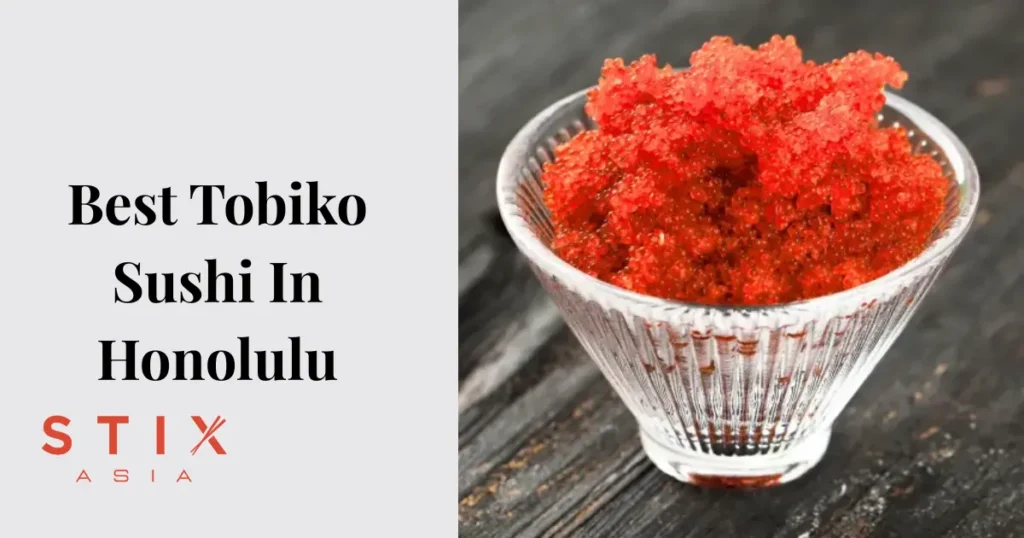
So what is tobiko exactly? Tobiko is the roe, or eggs, of flying fish, a family of fish known for gliding above the ocean’s surface on wing-like fins. The eggs are naturally golden in color, though sushi chefs commonly dye tobiko with other ingredients: beet juice for red, wasabi for a spicy green, and squid ink for a striking black. Each egg measures slightly under a millimeter, small but noticeably larger than its lookalike.
Tobiko’s defining feature is texture. Biting into it produces a distinct, satisfying pop, followed by a flavor that leans salty and faintly smoky, with just a touch of natural sweetness. Because of that texture, tobiko often plays a starring role rather than a background one, whether piled generously on top of nigiri or worked directly into a specialty roll. For a deeper look at how it shows up on the menu, this guide to sushi rolls made with tobiko covers the full range of preparations.
What Is Masago?
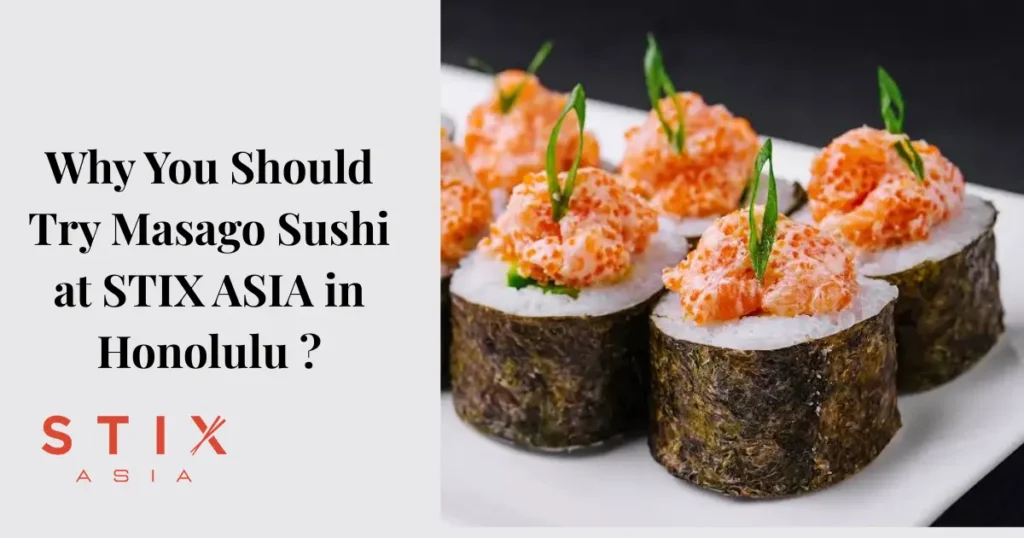
What is masago, then, if not simply a smaller version of the same thing? Masago comes from an entirely different fish: capelin, a small, slender smelt found in cold waters across the North Atlantic and North Pacific. In Japan, a closely related smelt called shishamo sometimes provides the roe instead, though imported capelin roe is far more common outside Japan due to its lower cost and wider availability.
Masago eggs are noticeably smaller and finer than tobiko, with a pale yellow color in their natural state that most restaurants brighten with dye, most often into the same familiar orange associated with fish eggs on sushi. The texture is softer and less crunchy, closer to a gentle sandiness than a pop, and the flavor is milder and saltier upfront, with a subtle bitterness that tobiko doesn’t share. A full breakdown of its use in rolls and garnishes is available in this guide to masago in sushi.
Tobiko vs. Masago: Key Differences Side by Side
Once you know what to look for, telling tobiko and masago apart gets much easier.
Size is the fastest way to distinguish them. Tobiko eggs run close to a millimeter across, while masago eggs are smaller and finer, closer to sand than to visible beads. Color follows a similar pattern, since tobiko often appears in a wider range of dyed shades, including green and black, while masago is typically limited to a range of orange tones.
Texture separates them just as clearly. Tobiko delivers a firm, crunchy pop with each bite, while masago offers something softer and less distinct, without the same crunch. Flavor differs too: tobiko carries a slightly sweet, smoky depth, while masago tends toward a plainer saltiness with a mild bitter edge. Finally, price reflects all of these differences. Because flying fish roe requires more careful harvesting, tobiko typically costs more than masago, which is one reason masago became the more common substitute at sushi restaurants across the United States.
Ikura vs. Tobiko: Where Salmon Roe Fits In
No comparison of Japanese fish eggs is complete without mentioning ikura, the large, glistening orange roe that comes from salmon rather than flying fish or capelin. Ikura vs tobiko is really a comparison of scale and richness. Ikura eggs are dramatically larger, roughly the size of a small pearl, with a soft skin that releases a rich, briny burst of flavor when bitten. Tobiko, by contrast, stays small and crunchy, playing more of a supporting role than a centerpiece. For a closer look at how salmon roe is used and why it commands a higher price than either tobiko or masago, see this guide to ikura and salmon roe.
Nutrition and Sustainability
Both tobiko and masago pack a meaningful nutritional punch for such a small ingredient. Fish roe in general is a concentrated source of omega-3 fatty acids, protein, and vitamin B12, and research on flying fish roe specifically has found it to be rich in phospholipid fats, compounds studied for their potential role in supporting heart and liver health, according to reporting summarized by Medical News Today. As with most roe, sodium and cholesterol levels run on the higher side, so both ingredients are best enjoyed as a flavorful accent rather than a primary protein source.
Sustainability is worth a mention too, particularly for masago. According to a stock assessment from NOAA’s National Marine Fisheries Service, commercial harvesting of capelin in US waters has been prohibited since 1998, which means most masago sold domestically is imported rather than sourced from American capelin stocks. Meanwhile, a lipid-profiling study published through the National Institutes of Health found that Japan’s native shishamo smelt, a close relative of capelin, differs from imported capelin in its fat composition, which helps explain why quality and flavor can vary depending on which smelt species actually supplies a given batch of masago.
How STIX ASIA Uses Tobiko and Masago
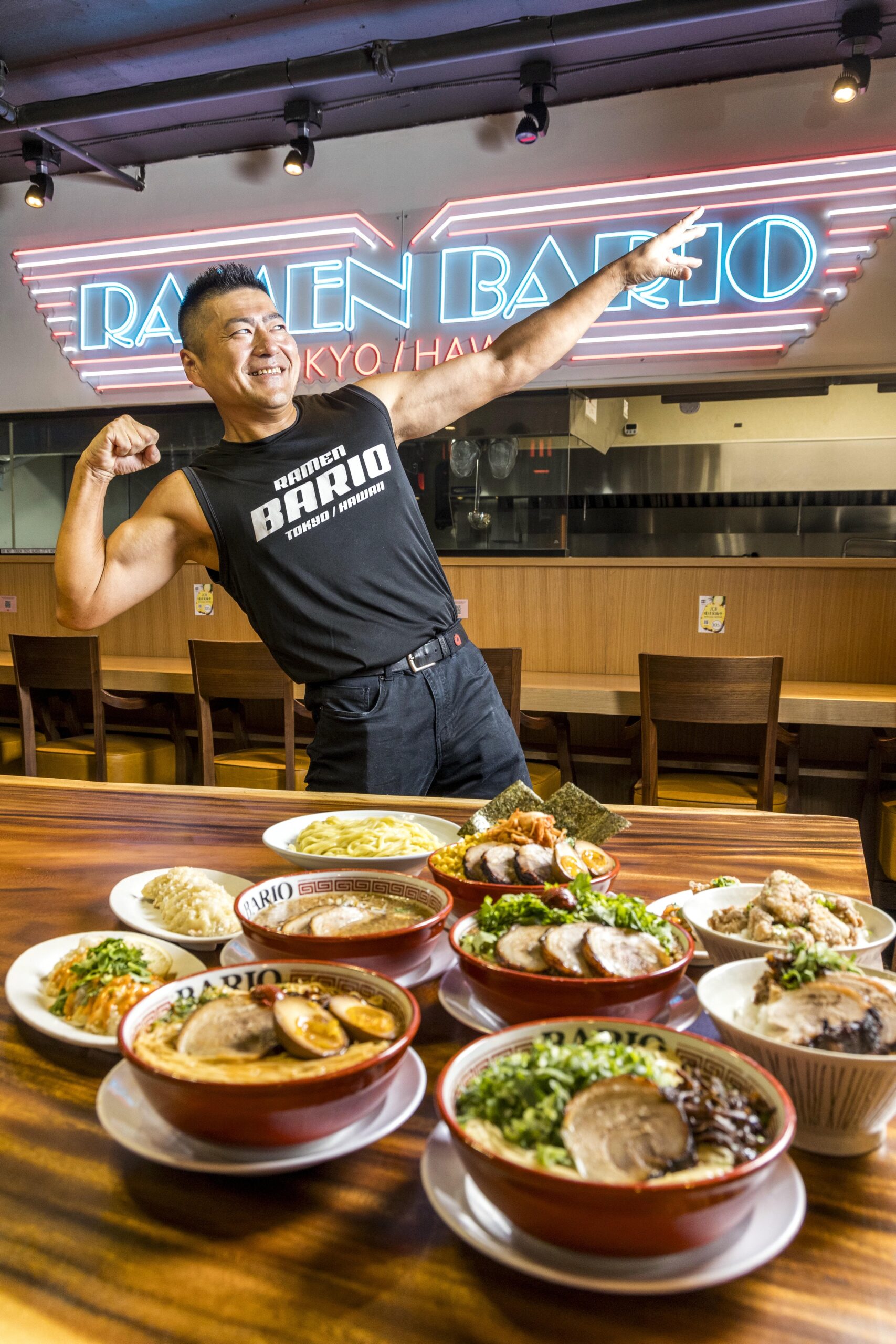
At STIX ASIA, an Asian food hall in Waikiki bringing together concepts like Sushi Matsuri and Ramen BARIO under one roof, both tobiko and masago show up regularly, each suited to a different role on the plate. Tobiko tends to top specialty rolls where its color and crunch can shine on their own, while masago works well folded into spicy mayo-based rolls or scattered as a finishing garnish, where its milder flavor doesn’t compete with other ingredients. This is also a practical way to try both without committing to a full plate of either, since a shared roll makes it easy to compare a bite of each side by side. Guests curious about how either ingredient appears across the menu can check the full lineup of sushi roll types or explore how roe pairs with other classics like nigiri.
Which One Should You Order?
If a bold pop of texture and a slightly sweeter, smokier flavor sound appealing, tobiko is the better choice, especially on nigiri or a specialty roll where the roe itself is meant to stand out. If a milder, subtler flavor is more your speed, or if a lower price point matters more than the added crunch, masago is the practical pick, and it works particularly well in rolls where other ingredients, like avocado or spicy mayo, are meant to lead.
Either way, both are simply Japanese fish eggs worth trying at least once side by side. The easiest way to settle the tobiko vs masago debate for yourself is to order both and compare them directly, one bite at a time.
Frequently Asked Questions
Is tobiko the same as masago?
No. Tobiko comes from flying fish, and masago comes from capelin, a type of smelt. They look similar once dyed, but they come from different species entirely.
Can you substitute masago for tobiko?
Yes, and many restaurants already do this because masago costs less. The swap changes the texture and flavor slightly, since masago is softer and milder than tobiko’s signature crunch.
Why is tobiko more expensive than masago?
Tobiko costs more because flying fish roe requires more careful, labor-intensive harvesting than capelin roe. Masago’s wider availability and lower harvesting cost keep its price down, which is why it became the common substitute at sushi restaurants across the US.
Is tobiko or masago healthier?
Both offer a similar nutritional profile, rich in omega-3 fatty acids, protein, and vitamin B12, with sodium and cholesterol on the higher side. Neither has a meaningful health edge over the other in the small portions typically served on sushi.
Is masago sustainable?
Largely yes for US consumers, since commercial capelin harvesting has been banned domestically since 1998, meaning most masago sold in American restaurants is imported. For a closer look at how roe like this appears across different rolls, see this guide to sushi roll types.
What does tobiko taste like compared to masago?
Tobiko tastes slightly sweet and smoky with a firm, crunchy pop. Masago is milder and saltier, with a subtle bitterness and a softer, sandier texture.